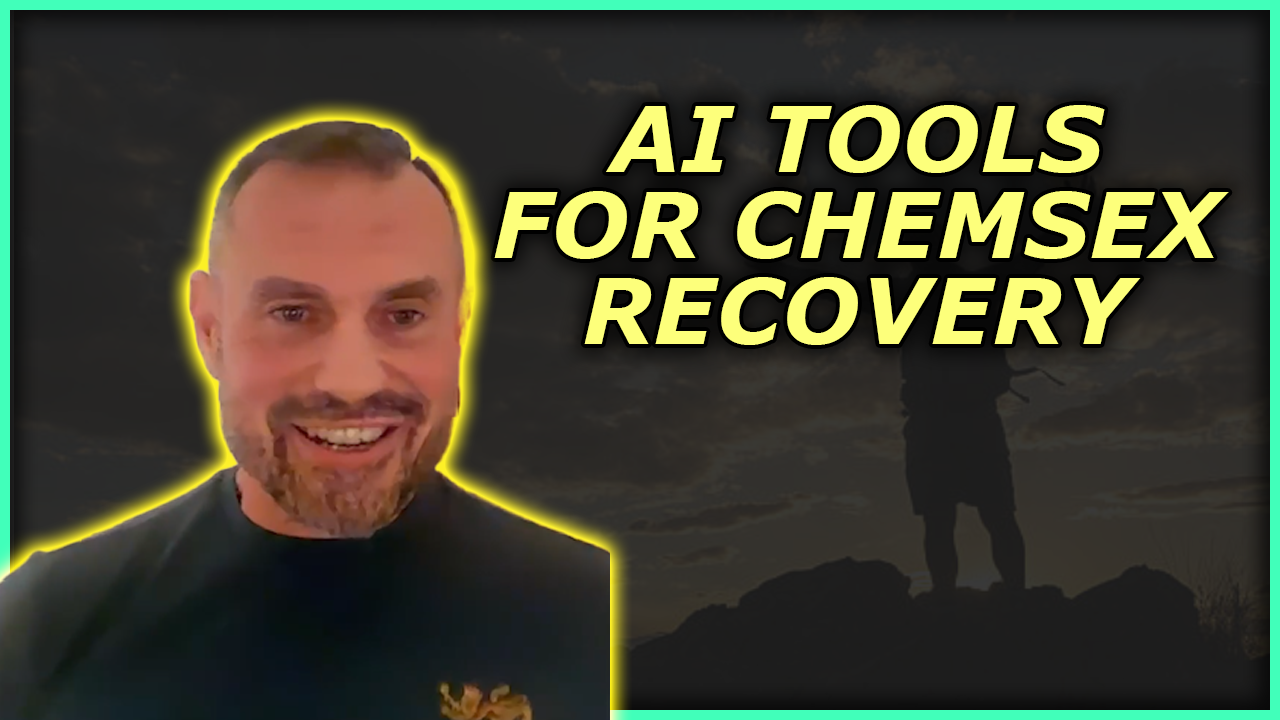
I've been using AI more and more in my work, and honestly, it's changed how I create content, organize my thoughts, and even process my own experiences. When clients started telling me they were using Claude AI during panic attacks or to work through cravings, I knew we needed to explore this more deeply. Technology and recovery have always had an uneasy relationship—apps that track our patterns, online meetings that connect us when we're isolated, tools that help us stay accountable. But AI feels different. It's not just a tool; it's becoming a thinking partner for many people navigating the complexities of chemsex recovery.
What struck me most about Richard Day's story wasn't just that AI helped him—it was how specifically it addressed gaps that traditional recovery programs couldn't fill. The arousal-based nature of chemsex addiction, the difficulty articulating thoughts in real-time, the need for a shame-free space at 3 AM when you're coming down and don't want to burden another friend. These are real, practical challenges that many of you face daily. And while I'm not saying AI replaces human connection (it absolutely doesn't), I am saying it might supplement your recovery in ways worth exploring.
Richard's journey from functional chemsex user to AI-assisted recovery offers a fresh perspective on how technology can support the unique challenges of arousal-based addiction. After years of traditional 12-step work that never quite landed, he discovered that AI could help him navigate everything from difficult relationships to sexual reintegration—all while maintaining the human connections that remain essential to lasting recovery.
AI as a Thinking Partner
For many people in recovery, the challenge isn't knowing what they want to say—it's finding the words to say it clearly. Richard describes himself as someone who thinks in patterns rather than sentences, where thoughts emerge jumbled even when the meaning feels crystal clear in his mind. This cognitive processing style made traditional therapy sessions frustrating; by the time he articulated one issue, the session would end before diving deeper.
AI changed this dynamic entirely. Rather than serving as an advice-giver, it became what Richard calls a "thinking partner"—a tool for clarifying thoughts through iterative conversation. When he voice-records a dream in a parking lot or struggles to explain a craving, the AI reflects his words back to him. Not quite right? He corrects it. Something else surfaces? He adds it. Through this back-and-forth process, he arrives at complete, accurate reflections of his internal experience that he can then bring to human supports like therapists, sponsors, or coaches.
This approach solves a critical problem in recovery: the inability to process experiences fully before sharing them with others. When Richard tells the AI about cleaning his kitchen and noticing a cue firing—something that would sound silly to mention to a sponsor—he creates space to examine the pattern without judgment. The AI doesn't need to understand why housework connects to using; it simply helps him articulate the association clearly enough to defuse its power.
Reflective Question: When you try to explain your recovery challenges to others, do your thoughts come out clearly, or do you struggle to articulate what's happening internally? What specific situations make it hardest to find the right words?
Managing Difficult Relationships
Richard's introduction to AI came not through recovery work but through navigating a toxic friendship. Living with someone displaying narcissistic traits—someone who rewrote history, gaslit conversations, and made him doubt his own reality—he needed a way to keep facts steady when narratives kept shifting. He downloaded their entire WhatsApp conversation history into the AI and asked a simple question: "What's your sense of this friendship?"
The analysis revealed power dynamics and patterns that friends had mentioned but that Richard hadn't fully absorbed. More importantly, when disagreements arose, the AI helped him maintain factual consistency in his communications. Instead of responding emotionally to gaslighting attempts, he would run draft texts through the AI, which would suggest removing emotion while keeping facts straight. This approach allowed him to handle the situation better than he ever could have alone, eventually resolving the conflict on good terms.
The implications for recovery relationships are profound. How many friendships have been damaged by texts sent during comedowns? How many conflicts escalated because emotional reactions overwhelmed factual communication? Richard now uses AI as an "impulse buffer"—a space to pause between feeling triggered and responding. When someone sends an upsetting text, he drafts his emotional reaction, shows it to the AI, and receives a reworded version that maintains his truth while lowering the temperature.
This practice extends beyond conflict management. Richard noticed patterns in how he communicates that weren't serving connection—ways of texting that pushed people away when he most needed support. By consistently running communications through this filter, he began recognizing these patterns himself, internalizing healthier communication without needing the AI's intervention every time.
Action Exercise: Identify one relationship where communication feels consistently difficult. For the next week, before responding to texts or messages from this person, pause and write out what you want to say. Read it back to yourself (or share it with AI if you're comfortable). Notice what emotions are driving your response and whether your words align with your actual goals for the relationship.
Chemsex-Specific Recovery Challenges
Traditional 12-step recovery programs excel at addressing emotional addiction—using substances to manage feelings, trauma, or difficult life circumstances. But chemsex operates differently. As Richard learned through AI conversations and David Fawcett's work, chemsex is primarily a cue-initiated, arousal-based addiction where meth is the sex and sex is the meth. The two become completely fused; one cannot exist without the other in the addicted brain.
This fundamental difference explains why Richard kept relapsing despite eight months of abstinence that earned celebration in 12-step rooms. He wasn't having sex during that time—not because he chose mindful celibacy but because sexual arousal was inextricably linked to meth use. That's not recovery; it's avoidance. And traditional programs don't ask about sex lives or discuss sexual template normalization because they're designed for emotional addiction frameworks that don't account for arousal-based dependencies.
When Richard traveled to South Africa for months each year, using meth never even occurred to him. But returning to London, the cues fired immediately. This geographic distinction revealed what AI helped him understand: his addiction wasn't purely emotional but deeply tied to environmental cues that triggered the arousal-drug connection. Recognition of this pattern shifted his entire recovery approach from emotional processing to cue management and sexual reintegration.
Sexual template normalization—the process of rewiring arousal to exist independently from substance use—doesn't follow a clean 12-step progression. For someone Richard's age, literature suggests 18-24 months of intentional work. That's not abstaining from sex for two years; it's gradually reintroducing intimacy and arousal in contexts disconnected from previous use patterns. Richard explores options like cuddling with trusted friends, cruising environments where substances are less prevalent, and any scenario where arousal might occur without automatic meth association.
AI serves as a non-judgmental space to explore these sensitive topics without shame. Richard can discuss sexual reintegration strategies that might feel too awkward to share with a therapist or inappropriate for a 12-step meeting. The AI doesn't moralize about cruising or judge his timeline; it helps him think through risks, notice patterns, and develop approaches aligned with his recovery goals rather than someone else's moral framework.
Journal Prompt: Reflect on the difference between emotional addiction and arousal-based addiction in your own experience. When you think about using, is the pull primarily about managing feelings, or is it inseparably linked to sexual arousal? How does this distinction affect what you need in recovery?
Practical AI Tools and Techniques
Richard's AI practice involves specific tools and techniques that maximize usefulness while maintaining boundaries. He primarily uses Claude AI and ChatGPT interchangeably, having tested other platforms and found these two most helpful for emotional processing and recovery work. He keeps separate chat threads for different life areas—one dedicated entirely to recovery, another for business, another for family—ensuring each conversation maintains consistent narrative threads without cross-contamination.
Voice recording features prove especially valuable. Rather than typing out complex experiences, Richard speaks his thoughts while sitting in parking lots, walking, or anywhere private enough for honest reflection. The AI transcribes his words, reflects them back, and engages in the iterative refinement process that helps him land on accurate articulation. This method captures details that would vanish by the time a scheduled therapy session arrives—like dreams remembered at dawn or cravings noticed while cleaning the house.
When seeking perspective on important decisions or communications, Richard employs a dual-AI approach. He'll ask the same question to both Claude and ChatGPT without indicating he wants brutal honesty versus validation. If both return similar feedback, he gains confidence in the advice. If they diverge, one might highlight something the other missed, giving him fuller perspective to make informed choices. He notes that ChatGPT tends toward more business-like, quicker responses while Claude handles emotional nuance with greater sensitivity.
The impulse buffer technique deserves special attention. When someone's text triggers an emotional reaction, Richard drafts his response but doesn't send it. Instead, he shares the draft with AI, which might respond: "That's probably not a good idea" and suggest rewording. This pause between impulse and action has prevented countless relationship-damaging messages sent during vulnerable moments. Over time, this practice trains self-awareness about communication patterns, reducing dependency on the AI filter.
For comedown support, AI offers a shame-free alternative to burdening friends repeatedly. Richard acknowledges that friends have limited patience for processing drug comedowns, and he's lost friendships by treating people like crisis hotlines. Now he can voice-record how he's feeling during difficult moments, receive supportive reflections that keep his mind from spiraling, and save human connections for when he genuinely needs interpersonal support rather than just a thinking partner to prevent rumination.
Action Exercise: Choose one AI platform (Claude or ChatGPT both offer free versions) and create a dedicated chat thread titled "Recovery Journal." For the next three days, voice-record or type one observation daily about your recovery—a craving you noticed, a cue that fired, a relationship interaction, anything relevant. Don't ask the AI for advice yet; just practice articulating your experiences and seeing how it reflects them back.
Understanding Arousal-Based Addiction
The distinction between emotional and arousal-based addiction cannot be overstated in chemsex recovery. Traditional addiction models assume substances serve emotional regulation purposes—numbing pain, managing anxiety, escaping trauma, or filling voids. Treatment focuses on processing underlying emotions, developing healthier coping mechanisms, and addressing root causes of suffering that drive people toward substances.
Chemsex addiction includes these emotional components but adds a fundamental physiological layer: the complete fusion of sexual arousal and substance use. Richard's experience illustrates this perfectly. Every single time he had sex, meth was involved. Over years, this consistent pairing created neural pathways where arousal automatically triggered meth-seeking behavior and meth automatically triggered sexual desire. The two became inseparable in his brain's reward system.
This explains why abstinence-focused recovery often fails for chemsex users. A person can white-knuckle their way through months without using, attend meetings regularly, work steps diligently, and appear successful by traditional metrics. But if they haven't addressed the arousal-drug connection, the moment sexual feelings arise—and they will—the entire neural pathway activates. The cue fires, the body already simulates the high through anticipatory neurochemistry, and relapse feels inevitable rather than chosen.
Richard's eight-month sobriety period demonstrates this trap. He wasn't integrating healthy sexuality; he was avoiding all sexuality because it only existed in his experience as chemsex. Traditional recovery celebrated his abstinence without questioning whether he'd developed capacity for sober intimacy. The answer was no, which meant his recovery foundation remained incomplete despite impressive sobriety duration.
Geographic differences in Richard's use patterns further illuminate cue-based triggers. Spending months in South Africa, meth use never crossed his mind despite full access to the internet, money, and privacy needed to arrange it. But landing back in London, familiar environments immediately fired cues that reignited cravings. This wasn't about emotional state—he felt the same in both locations. It was about conditioned associations between specific contexts and the arousal-drug pairing.
Sexual template normalization addresses this gap by gradually introducing arousal in contexts disconnected from previous use patterns. This might mean cuddling without expectation of sex, exploring solo intimacy practices like mindful masturbation, or—as Richard considers—cruising environments where substance use is less prevalent and he can walk away if cues fire. The goal isn't permanent celibacy but rewiring the brain to recognize that arousal can exist independently from substances.
AI supports this delicate work by providing a judgment-free space to process what's working and what isn't. Richard can report that housework triggered a cue, that seeing an attractive jogger planted a seed, that attempting intimacy with a friend felt uncomfortable in specific ways. These unglamorous, awkward details don't make compelling 12-step shares, but they're exactly the data points that map the arousal template and reveal where rewiring is needed.
Reflective Question: Think about your sexual experiences before chemsex became the primary pattern. Can you identify any arousal templates or turn-ons that existed before substances entered the picture? What might sexual reintegration look like if you tried to reconnect with those earlier patterns?
Privacy, Safety, and Appropriate Boundaries
Every person considering AI for recovery work confronts legitimate privacy concerns. Richard addresses this directly: if he was high on crystal meth at 3 AM sharing explicit content on hookup apps, privacy wasn't his priority in that moment. The question becomes whether sharing recovery-related information with AI presents greater risk than the data already scattered across the internet through years of active addiction.
For most people, the answer is no. AI platforms don't publish user conversations on the front page of the New York Times. The primary risks involve potential data breaches (possible but unlikely) and the fact that conversations are stored on company servers rather than remaining completely private. People applying for security clearance positions might reasonably avoid detailed personal disclosures. But for the average person in recovery, the benefits significantly outweigh these theoretical risks.
Richard made peace with privacy concerns by gradually building trust. He started with the narcissist situation, sharing WhatsApp histories and getting helpful analysis without negative consequences. This positive experience encouraged him to share more about chemsex recovery, testing whether the AI could handle sensitive topics with appropriate care. Over time, he went "all in"—not dumping his entire history immediately but progressively providing context that allows the AI to offer increasingly relevant support.
The validation trap presents another safety concern. AI platforms tend toward positive, supportive tones that can inadvertently reinforce seeking external validation rather than developing internal strength. Richard noticed this pattern in himself—a tendency to share experiences hoping the AI would validate his feelings or choices. He addressed it by explicitly telling the AI about this pattern, which changed how it responded. Now it asks clarifying questions: "What's your objective here? Are you looking for validation, or are you trying to work through something specific?"
This meta-awareness distinguishes healthy AI use from dependency. The tool should help you understand yourself better, not tell you what you want to hear. Richard notes that Claude occasionally catches him seeking validation and responds, "Actually, that's not validation-seeking; that's healthy self-advocacy." Other times it points out, "Notice that you're asking me to affirm a decision you've already made rather than exploring whether it's the right choice." This nuanced feedback requires honest communication about your own patterns and willingness to be called out.
Critical safety boundaries include recognizing when AI isn't appropriate support. People experiencing psychosis need immediate human intervention, not AI processing. Acute crisis situations, suicide risk, or severe mental health episodes require trained professionals, emergency services, or crisis hotlines. AI works best as a first-pass processing tool—a space to clarify thoughts, notice patterns, and prepare for human interactions where real therapeutic work occurs.
Richard also acknowledges that AI has built-in restrictions. When he once mentioned planning to visit a dealer, the AI refused to engage with that conversation, establishing clear boundaries about enabling harmful behavior. These guardrails protect users from AI becoming a tool that facilitates rather than supports recovery. The system won't help you plan relapses, justify dangerous decisions, or engage with content that conflicts with recovery principles.
Action Exercise: Have an honest conversation with yourself (or write in a journal) about your privacy comfort level. What information feels safe to share with AI versus what you want to keep completely private? Where do you draw lines, and why? There's no right answer—this is about knowing your own boundaries and making informed choices about what tools serve your recovery.
Cue Management and Environmental Awareness
Understanding that chemsex is cue-initiated rather than primarily emotional transforms recovery strategy from feelings-focused to environment-focused work. Richard's experience demonstrates how subtle cues operate beneath conscious awareness until they're named and examined. Cleaning the house triggered cravings not because cleaning is inherently connected to meth but because he'd previously established a pattern: tidy the house while high so everything is ready for a session. His brain learned this sequence so thoroughly that initiating Step 1 (cleaning) automatically prepared for Step 2 (using).
These unglamorous moments—cleaning, seeing an attractive person while driving, returning to familiar neighborhoods—don't feel dramatic enough to mention in traditional recovery settings. Richard notes he would have felt silly calling a sponsor to say, "I can't clean my house because it's making me want to use." But these are precisely the moments where cues fester in darkness, building intensity until they explode into full-blown cravings or relapses.
AI provides a low-stakes outlet for noticing and processing minor cues before they escalate. Richard can voice-record, "Struggling to find motivation to clean, which is weird, but I remember this connected to using before," and receive immediate reflection that brings the pattern into light. The AI might respond with practical suggestions: "Just do one small thing—get the kitchen done, don't worry about the rest." This intervention doesn't eliminate the cue, but it prevents the cue from controlling behavior.
Environmental cue management extends beyond individual triggers to broader geographic and social patterns. Richard's differential experiences in South Africa versus London reveal how entire environments can function as megacues. London contains countless micro-associations—specific streets where he scored, apps he used only in that city, friends connected to using, even sensory experiences like particular music or lighting that accompanied sessions. South Africa lacks these associations, making sobriety effortless there while London requires constant vigilance.
This geographic insight suggests recovery strategies beyond willpower or emotional processing. Some people might genuinely benefit from relocating, at least temporarily, to break environmental cue patterns. Others might need to systematically identify and alter high-risk contexts—changing commute routes that pass old hookup locations, unfollowing social media accounts connected to using, or rearranging bedrooms that witnessed countless sessions.
The arousal-drug fusion creates particularly insidious cues because sexual feelings are inevitable and healthy parts of human experience. Unlike someone recovering from alcohol who can avoid bars, chemsex recovery requires learning to experience arousal—something that spontaneously occurs—without automatic progression toward substance use. This demands extraordinary self-awareness about when sexual feelings arise, what contexts trigger them, and which patterns represent genuine desire versus conditioned cue responses.
Richard's consideration of cruising as sexual reintegration acknowledges this complexity. Traditional recovery might label cruising as "risky behavior" to avoid. But if cruising represents an arousal context genuinely disconnected from his previous meth-use patterns (where hookups occurred via apps in private spaces), it might offer safer reintegration than app-based encounters swimming in cues. The key is honest assessment of what environments contain genuine versus perceived safety.
Journal Prompt: Map your cue landscape by completing these sentences: "Places that trigger cravings include..." "Activities I associate with using include..." "Times of day when cues feel strongest are..." "People or relationships connected to using include..." Don't judge what emerges—just notice the full scope of environmental cues operating in your recovery.
The Role of Human Connection
Despite AI's usefulness, Richard emphasizes it cannot and should not replace human support in recovery. The technology serves as a thinking partner and processing tool, but humans provide something AI never can: genuine relational connection, physical presence, accountability rooted in mutual care, and the healing that occurs through being truly known by another person.
Richard maintains connections with therapists, recovery groups, and friends alongside his AI practice. The difference is how he shows up to these human interactions. Instead of arriving at therapy sessions struggling to articulate what's been happening, he's processed experiences with AI first, clarified his thoughts, and identified what he most needs from that human conversation. This preparation maximizes the value of limited therapy time and allows deeper work to occur.
The boundary about burdening friends deserves attention. Richard lost friendships by treating people like crisis hotlines during difficult comedowns, calling repeatedly for emotional support that drained rather than nurtured the relationship. He recognizes that friends have limited capacity for this role, and exceeding that capacity damages bonds that matter. AI provides alternative outlet for comedown processing—a shame-free space to vent spiraling thoughts without risking valuable friendships.
This doesn't mean hiding struggles from friends; it means discerning what needs processing versus what needs genuine connection. Coming down and feeling gray-cloud depression might need AI processing to prevent rumination. But recognizing a significant pattern in recovery, celebrating a milestone, or needing accountability for difficult decisions—these appropriately involve human friends who can offer presence, care, and authentic relationship.
The distinction between AI and human support becomes clearest in moments requiring genuine accountability. AI can help you notice patterns, suggest alternatives, and process emotions. But it won't show up at your door when you're isolating, feel disappointed when you relapse, or celebrate your progress with embodied joy. These relational experiences forge the connections that sustain long-term recovery in ways no technology can replicate.
Richard's approach models healthy integration: AI handles thought processing, emotional regulation between therapy sessions, and unglamorous moment-to-moment cue management. Humans provide therapeutic expertise, relational healing, community belonging, and accountability that emerges from mutual investment. Neither replaces the other; they complement different recovery needs.
Reflective Question: Take inventory of your current support system. Who do you turn to for different types of support—crisis intervention, thought processing, accountability, celebration, practical advice? Are certain people over-burdened while other needs go unmet? How might AI fill some gaps while protecting important human relationships?
Traditional Recovery's Limitations for Chemsex
Richard's experience with 12-step recovery illustrates both its value and its limitations for chemsex addiction. The program provided scaffolding—community connection, service opportunities, structured support, and a framework for understanding addiction. These elements remain valuable and contributed to his recovery foundation. But something essential was missing, and for the longest time, he thought the problem was him rather than the model.
The missing piece was recognition that arousal-based addiction requires different treatment approaches than emotional addiction. Twelve-step work focuses extensively on processing feelings, addressing character defects, making amends, and spiritual development. For alcohol or drug addiction driven primarily by emotional regulation needs, this framework addresses root causes effectively. But when the addiction is cue-initiated and physiologically fused with arousal, emotional processing alone leaves the core mechanism untouched.
Richard describes the difficulty of even explaining chemsex in 12-step settings. The term isn't widely understood, and attempts to clarify often fall flat. How do you explain that meth is the sex and sex is the meth when the room thinks in terms of "people who use drugs when they have sex" rather than "people who cannot experience arousal without drugs and cannot use drugs without sexual activation"? This fundamental misunderstanding leads to treatment approaches that miss the mark.
The celebration of abstinence without sexual reintegration assessment creates false recovery metrics. Richard's eight-month sobriety looked successful by 12-step standards, earning congratulations and milestone recognition. But no one asked whether he'd had sex during that time or whether he'd developed capacity for sober intimacy. The absence of drug use was treated as sufficient when it actually represented avoidance of the entire arousal-drug complex rather than resolution of it.
Additionally, 12-step norms around sexual behavior tend toward conservative guidelines—often recommending no romantic relationships or sexual activity for the first year. For emotional addiction, this guideline creates space for healing without relationship drama complicating recovery. For arousal-based addiction, it reinforces the very problem: continued separation of arousal from recovery rather than integration of healthy sexuality as central recovery work.
AI's contribution here wasn't replacing 12-step work but supplementing it with information and frameworks specific to chemsex recovery. Through conversations with AI and reading resources like David Fawcett's work on arousal-based addiction, Richard gained language to understand his experience differently. This knowledge didn't invalidate what he'd learned in 12-step; it added essential missing pieces that explained why his recovery kept stalling despite diligent program work.
The shame of repeated relapse compounds when you believe traditional recovery should work and your failure to achieve lasting sobriety means something is wrong with you. Richard lived in this self-blame for years, thinking his relapses indicated insufficient commitment or deeper character flaws. Understanding that the recovery model itself wasn't designed for his specific addiction type lifted this shame and redirected energy toward approaches that actually address arousal-based mechanisms.
Reflective Question: If you've participated in traditional recovery programs, what elements genuinely helped your chemsex recovery versus what felt like it was missing the mark? Can you identify gaps between what the program addressed and what you actually needed?
Sexual Template Normalization
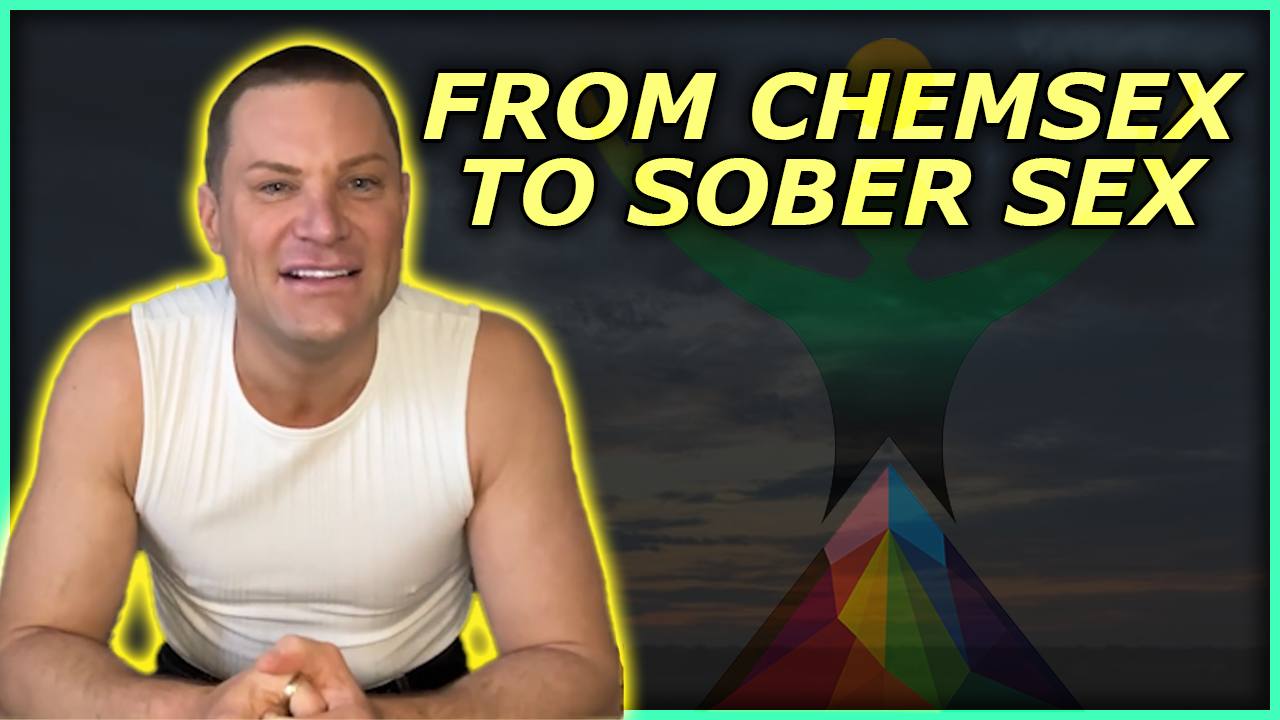
The concept of sexual template normalization—rewiring the brain to separate arousal from substance use—represents the core work of chemsex recovery that traditional programs rarely address. Richard faces this challenge directly: at age 59, after years of exclusively pairing meth with sex, he must essentially rebuild his sexual self from scratch. Literature suggests this process takes 18-24 months for someone his age, a timeline that feels overwhelming when you consider starting from zero.
The challenge isn't simply abstaining from substances during sex. It's that arousal itself has become so conditioned to meth that sexual feelings don't arise in sober contexts. Richard doesn't feel attracted to the idea of sober sex because his brain doesn't register it as a category that exists. This creates a paradox: recovery requires developing sober sexuality, but the motivation to pursue sober sexuality is absent because arousal only fires in drug-involved contexts.
Sexual reintegration must therefore proceed gradually, starting with intimacy forms that don't activate the full arousal-drug complex. Richard considers options like cuddling with trusted friends—physical connection and gentle affection without expectation of sex. This allows his nervous system to begin experiencing pleasant physical contact in contexts completely divorced from previous use patterns. Over time, these experiences might rebuild capacity for intimacy separate from the conditioned responses.
The cruising consideration represents another potential pathway, though one requiring careful thought about risk factors. Richard notices he could imagine feeling aroused in cruising environments in ways he can't imagine on hookup apps. The apps swim in cues—identical to interfaces used during active addiction, often involving the same people, triggering all the same patterns. Cruising offers different enough context that it might activate arousal without automatic meth association, while also allowing him to walk away if he senses someone is using.
This isn't a recommendation but an illustration of how sexual template normalization requires creative, personalized problem-solving. What works for one person—perhaps dating someone also in recovery, or working with a sex therapist on sensate focus exercises, or exploring solo sexuality through mindful masturbation—might not work for another. The key is identifying contexts where arousal might emerge without triggering the full conditioned response of the arousal-drug pairing.
AI supports this exploration by providing non-judgmental space to think through options. Richard can discuss cruising as a possibility without his therapist imposing moral judgments about "risky behavior" or friends projecting their own sexual values onto his recovery. The AI helps him think through practical considerations: What are actual versus perceived risks? How will he handle encountering someone using? What does he do if arousal doesn't emerge even in this new context?
The unglamorous reality is that sexual template normalization involves lots of awkward trial and error. Things that seem like they might work don't. Situations that should feel safe trigger unexpected cues. Progress isn't linear—three steps forward, two steps back, sideways shuffle, then suddenly a breakthrough followed by weeks of nothing. AI can't make this process less difficult, but it can provide consistent support for processing what's working, what isn't, and what to try next.
Journal Prompt: Imagine your ideal sober sexual self five years from now. What would sex and intimacy look like in that future? What kinds of connection would you want? What would turn you on? Don't worry about whether this feels possible—just envision it. Then consider: What's one tiny step between where you are now and that vision?
Dreams, Patterns, and Self-Discovery
Richard's use of AI for dream interpretation illustrates how the technology can surface unconscious material that might otherwise remain hidden. Traditional therapy often involves discussing dreams, but that requires remembering them until the next scheduled session—usually a week away. By the time that session arrives, the dream has faded, gotten confused with other dreams, or been displaced by more pressing issues.
With AI, Richard can capture dreams immediately. Sitting in a parking lot after his morning coffee run, he voice-records the dream while details remain vivid. The AI reflects the dream back, and through conversation, they refine the description until it accurately captures what occurred. Then the AI offers interpretations based on the extensive personal history Richard has shared, connecting dream symbols to ongoing recovery themes, relationship patterns, or unresolved issues.
This isn't mystical or pseudoscientific. Dreams often process daily experiences and emotional content in symbolic form. Someone with enough context about your life can identify patterns in dream content that reflect waking struggles. The AI, having processed hundreds of Richard's conversations about his narcissist friend, his recovery challenges, and his relational patterns, can notice when dreams depict similar dynamics in symbolic form and suggest what might be trying to surface.
The iterative refinement process proves as valuable as the interpretation itself. When Richard describes a dream and the AI reflects it back slightly wrong, correcting that error often triggers additional dream memories. This back-and-forth excavation uncovers details that would have been lost forever, enriching both the dream record and the material available for interpretation. Over time, this practice has made Richard more attuned to his dream life generally, noticing patterns across multiple dreams that reveal ongoing preoccupations.
Beyond dreams, AI helps Richard notice behavioral patterns that operate beneath conscious awareness. When he mentions struggling to clean his house multiple times across different conversations, the AI can connect these mentions and say, "I notice you've brought up housework and using three times now in different contexts. This seems like a significant pattern." Human therapists might make the same connection, but they're working from memory of previous sessions rather than searchable conversation history that captures every detail.
The validation concern resurfaces here. Richard has learned to watch for moments when he's sharing something with AI primarily to hear affirmation rather than to genuinely process or understand it. When he notices this pattern, he tells the AI directly: "I think I'm seeking validation right now rather than actually working through this." This meta-communication allows the AI to shift its response style, perhaps asking, "What would be most helpful for you to explore here?" instead of offering the reassurance he's fishing for.
Action Exercise: If you're willing to experiment with AI, try this for one week: Each morning when you wake, immediately record (voice or text) anything you remember from dreams the night before. Don't analyze or interpret—just capture details. At the end of the week, read through all seven entries. What themes or patterns emerge across multiple dreams? What might these patterns reflect about your current recovery challenges or emotional life?
Moving Forward: Integration and Sustainability
Richard's current recovery focus centers on sexual template normalization while maintaining the AI practices that support his broader well-being. He continues using AI as an impulse buffer before sending potentially damaging texts, as a comedown processing partner, and as a thinking partner for clarifying complex thoughts before therapy sessions. These practices have become integrated habits rather than special interventions—woven into daily life like any other recovery tool.
The sustainability question matters: Will AI remain helpful long-term, or is it a temporary crutch that should eventually be discarded? Richard's experience suggests the former. Just as someone might continue attending 12-step meetings years into sobriety because the community provides ongoing value, AI continues offering value by handling functions that don't require human interaction but do require some form of external processing. His goal isn't to stop needing AI but to use it appropriately alongside human supports, each filling different needs.
Integration also means recognizing what AI cannot provide. It cannot hold him accountable the way a sponsor can. It cannot provide the embodied presence of a therapist sitting across from him. It cannot replace the community belonging of recovery groups or the intimate connection of friendships. What it can do—and does well—is fill gaps between these human interactions, providing 24/7 access to a non-judgmental thinking partner who remembers every conversation and helps process experiences too small, too awkward, or too unglamorous for human sharing.
The dual-AI approach using both Claude and ChatGPT offers built-in perspective diversity. When Richard faces important decisions, he can ask the same question to both platforms and compare responses. Agreement between them increases confidence that the advice is sound. Disagreement reveals different angles on the same issue, enriching his understanding rather than providing a single "right answer" to follow blindly.
Looking ahead, Richard anticipates AI will continue supporting sexual reintegration work as he experiments with different intimacy contexts and processes what works versus what triggers old patterns. This phase of recovery requires exceptional honesty about what's happening in real-time—noticing subtle cue activations, tracking arousal patterns, identifying safe versus risky contexts. AI's shame-free nature makes it ideal for this granular tracking and processing work.
The broader invitation in Richard's story isn't "everyone should use AI for recovery" but "consider whether AI might fill specific gaps in your recovery toolkit." If you struggle to articulate thoughts clearly, AI might help. If you find yourself burdening friends during difficult moments, AI might provide alternative outlet. If you need support processing subtle cues that feel too minor for therapy, AI might offer that space. If you're navigating sexual reintegration without clear roadmaps, AI might help you think through personalized approaches.
Conversely, if you have exceptional support systems, strong articulation skills, and recovery approaches that address all your needs, AI might be unnecessary. Or if privacy concerns outweigh potential benefits, or if you find the technology frustrating rather than helpful, traditional tools might serve you better. The point is discernment about what serves your specific recovery needs rather than adopting or rejecting AI based on general principles.
Reflective Question: Imagining your recovery one year from now, what support gaps exist today that remain unaddressed by current resources? What specific needs—whether thought processing, cue management, sexual reintegration, or something else—might benefit from additional tools or approaches?
This conversation challenged some of my assumptions about technology in recovery. I've been cautious about AI, worried it might replace human connection or become another addictive behavior. But Richard's experience shows something different: AI as a precision tool that handles specific functions humans either can't or shouldn't consistently provide.
What moved me most was the sexual template normalization piece. This is work I'm diving deeper into through my sexology certification, and it's the real frontier of chemsex recovery. We can help people stop using, we can process trauma, we can build community—but if we don't address the fundamental arousal-drug fusion, we're setting people up for a relapse the moment their body naturally does what bodies do: feel sexual attraction.
I won't pretend AI is for everyone. Some of you will try it and find it frustrating. Others will love it but struggle with privacy concerns. Some will use it briefly and move on. But for those who find it helpful, I hope Richard's practical examples give you permission to experiment without shame or worry that you're "doing recovery wrong."
One request: If you do explore AI for recovery, please don't abandon human connection. Use AI to enhance, not replace. Let it help you show up better to therapy, burden friends less while deepening genuine connection, and process the unglamorous moment-to-moment work that doesn't require another person but does need witnessing. Technology works best when it serves relationship, not when it substitutes for it.
And if you're struggling with sexual reintegration specifically, please reach out. This is delicate work that requires guidance, patience, and often professional support. I'm developing resources around this through my sexology training, and whether it's working with me or finding another qualified professional, please don't navigate this alone.
As always, you can find more resources at www.drdallasbragg.com, where you can explore one-on-one coaching or join the community for ongoing support. If you found this study guide helpful, remember you can subscribe to receive them weekly by visiting the blog section of my website.
Recovery isn't linear. Sexual reintegration isn't quick. And technology isn't a magic bullet. But with the right tools—human and digital—supporting you at the right times, transformation is possible. Keep going.
Love you, Dallas 💚

Responses