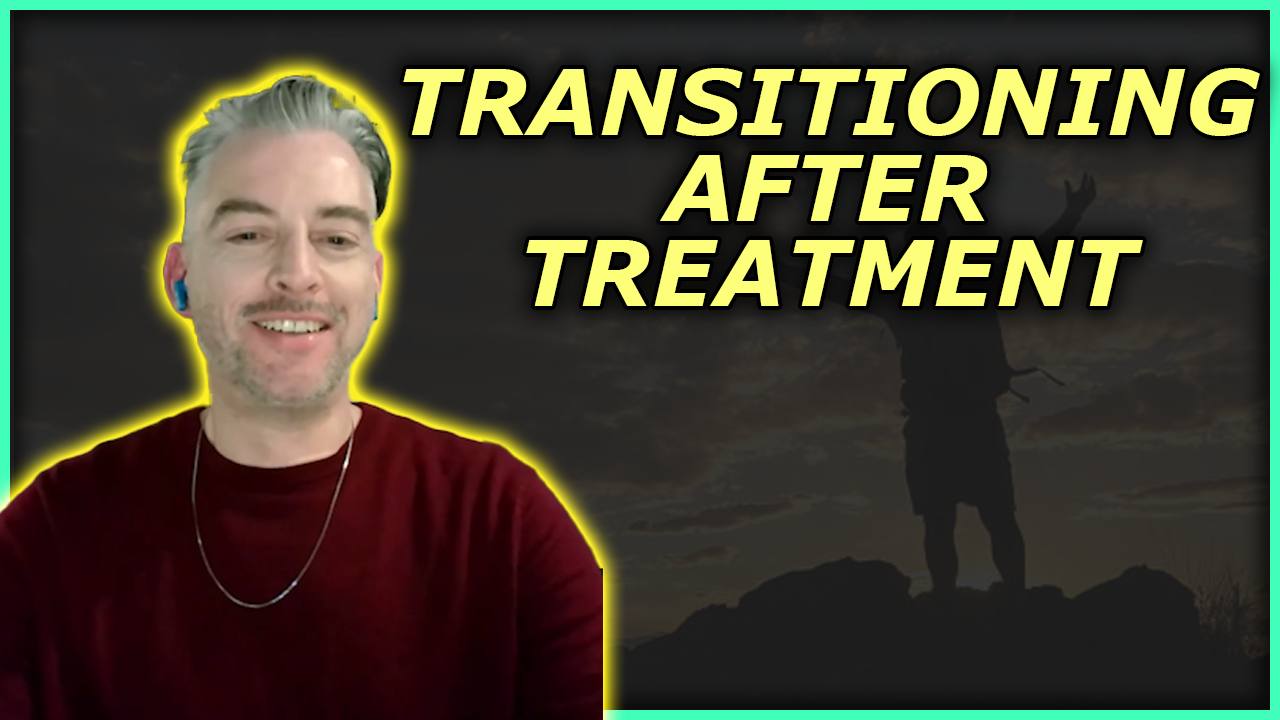
When I think about my early days in recovery, one of the hardest transitions wasn't giving up crystal—it was giving up the community that came with it. As isolating as active addiction was, there was paradoxically a whole ecosystem built around it. Dealers who knew my name. Buddies I'd see every weekend. A shared language and rituals that made me feel like I belonged somewhere, even if that somewhere was slowly destroying me.
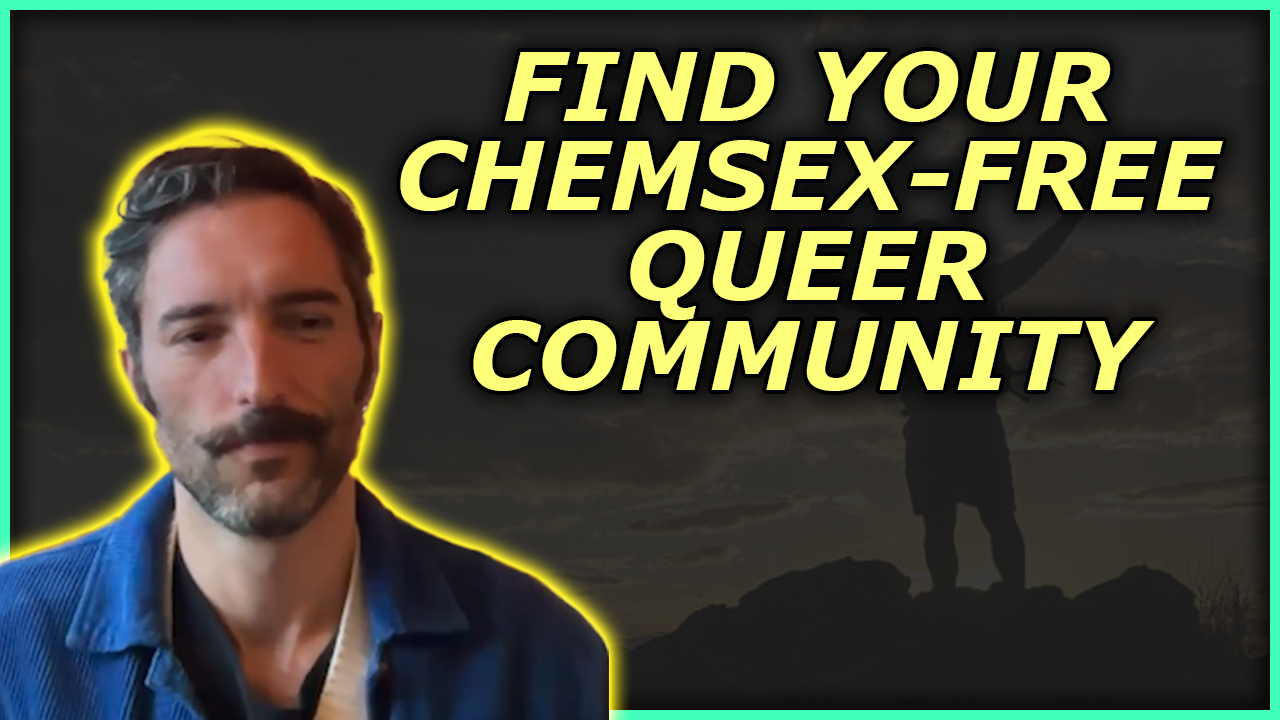
What Baeu shares in this conversation hit me right in the chest because he's naming something we don't talk about enough: the gay community has a connection problem, and substances have become our default solution. We've been taught that meaningful interaction requires either alcohol-soaked bars or app-based hookups. We've normalized walls so thick that vulnerability feels like weakness. And we've accepted that "community" means standing in a dark room, high out of our minds, pretending surface-level interactions are deep connection.
But here's what I've learned through my own recovery and through working with hundreds of you: we didn't fall in love with the drugs—we fell in love with what the drugs let us access. The playfulness. The freedom to be silly. The permission to touch and be touched. The rapid intimacy that bypassed all our armor. The substances were never the goal; they were the shortcut to getting needs met that we didn't know how to meet any other way.
Recovery asks us to find new shortcuts. Better ones. Sustainable ones that don't blow out our systems or steal years from our lives.
The Walls We Build, The Armor We Wear
Beau describes himself as formerly "robotic"—so shut down emotionally that he barely registered feelings, so defended against connection that he'd sit silently at parties or get blackout drunk just to participate. This numbness wasn't a personality flaw; it was survival architecture built brick by brick through years of homophobia, rejection, and learning that showing your true self wasn't safe.
Many of us built similar walls. We learned early that being visibly gay, being effeminate, being vulnerable could get us hurt—emotionally, socially, sometimes physically. So we armored up. We performed versions of ourselves we thought would be acceptable. We learned to scan every room for threats before we could relax. We developed elaborate defenses that kept us "safe" but also kept us isolated, numb, and desperately lonely.
Then came substances—the master key that unlocked all those defenses at once. Suddenly we could dance without self-consciousness. Touch without fear of rejection. Be silly, playful, sexual, vulnerable. The drugs didn't create new parts of us; they temporarily disabled the alarm systems that kept those parts locked away.
The work of recovery, then, isn't about becoming someone new. It's about learning to safely access those parts of yourself—the playful one, the vulnerable one, the one who craves connection—without chemical assistance.
Reflective Question: What walls have you built to protect yourself? When you think about lowering them without substances, what specific fears come up? Are those fears based on current reality or past experiences?
The Culture We Inherited, The Scripts We Follow
Both Beau and I talk about being "programmed" by what we saw in media, in bars, in the narrow representations of gay life available to us when we came out. For me, it was Will & Grace and whatever I could piece together from other shows. For younger guys, it might be Heartstopper or other current shows. But regardless of the era, there's a troubling pattern: gay male relationships are almost always depicted through the lens of sexuality, partying, or drama—rarely through the lens of genuine friendship, shared activities, or quiet connection.
When was the last time you saw two gay men on TV going for a hike? Playing board games? Having a book club? Reading poetry in the park? These activities aren't inherently more virtuous than dancing or sex—but their absence from our cultural narrative creates a poverty of imagination about what queer connection can look like.
So we default to what we've seen: bars, clubs, hookup apps, circuit parties. We learn to be bitchy because that's what we saw modeled. We compete for attention because scarcity mindset was taught to us. We sexualize every interaction because we don't have templates for non-sexual intimacy between queer men.
Breaking out of these scripts requires something radical: deciding who you actually are beneath the performance, then having the courage to show up as that person even when it doesn't match the cultural expectations.
Journal Prompt: Trace your journey of "learning" to be gay. What were your early models and influences? What parts of those models did you adopt that never actually fit you? If you could design your ideal gay social life from scratch, ignoring all cultural programming, what would it look like?
Substances as Connection Shortcut: Reframing with Compassion
One of the most powerful shifts Beau offers is reframing his substance use through a lens of compassion rather than shame. Instead of "I'm a drug addict who made bad choices," he sees "I was a traumatized person desperate to connect who found a shortcut that worked until it didn't."
This isn't about excusing harmful behavior or avoiding accountability. It's about understanding the function that substances served so you can address the underlying need directly.
When Bo walked into his first gay space at 22 on Fire Island, he finally felt like he belonged—and everyone was high and everyone was hooking up. Of course he dove in. When you've spent years feeling like an outsider, starved for community and acceptance, you'll grab whatever lifeline appears. The substances weren't the point; they were the vehicle for accessing a world where he felt less alone.
For many of us, this pattern continues for years or even decades. We know intellectually that the connections made while high aren't sustainable, that the community built around substance use is fragile. But we keep returning because the alternative—trying to connect sober in spaces that feel hostile to vulnerability—seems harder and scarier than the known quantity of getting loaded with people who at least temporarily accept us.
Recovery invites us to extend to ourselves the same compassion we'd offer a friend: You weren't broken for seeking connection through substances. You were responding rationally to the resources available and the nervous system you had. Now you're learning different strategies with a more regulated system. That's growth, not moral redemption.
Action Exercise: Write a letter to your past self at the height of your substance use. What were you trying to accomplish? What needs were you attempting to meet? Can you thank that version of yourself for trying to survive and find connection the only way they knew how? Then write a response from your current self about what you've learned about meeting those needs differently.
The Friction Problem: Why Connection Feels Like Work
Beau identifies something crucial: in our current social setup, genuine connection requires so much effort that we often choose the easier dopamine hit instead. Want to see friends? You have to coordinate schedules days in advance, travel 40 minutes each way, probably end up at a bar, invest hours of energy. Want a hookup? Open an app, exchange three messages, someone shows up.
The system is rigged toward quick, shallow interactions and against sustained, meaningful ones.
This is especially challenging in early recovery when your nervous system is still recalibrating, your energy is often low, and the prospect of putting on pants and showing up somewhere with strangers feels monumentally difficult. The path of least resistance is to stay home, scroll apps, maybe cave and hook up or use because at least that provides some simulation of connection.
But here's what I've learned: the initial friction of showing up is almost always worse than the actual experience of being there. Like Beau describes with the ecstatic dance—he didn't want to leave his house, but once he arrived, he was glad he pushed through. The anticipatory anxiety is fierce; the reality is usually manageable and often rewarding.
The key is lowering the barrier to entry. Don't make your first post-recovery social outing a four-hour networking event. Make it a 20-minute walk in the park. Make your only goal to show up, smile at people, and leave. Build gradually. Celebrate the small wins of just putting yourself in proximity to others.
Reflective Question: What specific friction points make connection feel like too much work for you? Is it the energy required? The unpredictability? The vulnerability? The time commitment? How might you lower those barriers to make initial connection attempts feel more manageable?
Creating New Rituals: Beyond Bars and Apps
Both Beau and I have had to consciously construct new rituals for connection that don't center on substances or sexual possibility. For Beau, it was living on a commune with other queer folks, attending ecstatic dance, hosting cuddle puddles. For me, it was ayahuasca ceremonies with hippie women, involvement in queer nonprofits, chamber of commerce networking, building friendships through shared recovery work.
None of these are inherently "better" than bars or apps—they're just different access points to meet different needs.
The Gather app that Beau created is essentially trying to reduce the friction around spontaneous, intention-based connection. Instead of defaulting to "anyone want to fuck?" it asks "anyone want to join me for this specific activity right now?" Want to walk through the park? Make fairy houses out of twigs? Sit and read in companionable silence? The app lets you signal that intention and find others who share it.
But whether you use Gather or Meetup or volunteering or hobby groups or recovery meetings, the principle is the same: you have to actively create the community you want instead of passively accepting the default options.
This requires some vulnerability. It means being the person who suggests the hike, hosts the game night, starts the book club—even when you're not sure anyone will show up. It means risking rejection and showing up anyway. It means trying things that feel awkward at first until they become familiar.
Action Exercise: Identify three activities you genuinely enjoy that could theoretically involve other people (they don't have to be conventionally "social" activities). This week, take one concrete step toward making one of them happen with at least one other person. This could be posting in a group, texting a friend, joining a club, or using an app like Gather to put out the invitation.
The Sexuality Question: Navigating Desire in Recovery Spaces
One of the most honest parts of this conversation is the acknowledgment that we've been so programmed toward sexualizing every interaction with other queer men that creating non-sexual intimacy feels foreign and difficult.
Beau talks about hosting cuddle puddles and having to explicitly set the boundary: "I really enjoy non-sexual physical intimacy." He talks about people assuming that if you're being affectionate, you must want to be sexual. This is the water we swim in as gay men—the assumption that all touch, all closeness, all vulnerability between us is foreplay.
Learning to separate touch from sex, intimacy from eroticism, vulnerability from seduction is essential recovery work, especially for those of us coming from chemsex where the two were completely fused. Your body may have learned that skin-to-skin contact equals sexual arousal. Your nervous system may spike with anxiety at the prospect of being close to someone without the "purpose" of sex.
This is retrainable. Like Beau gradually pushing his edges at hippie play parties, learning to be present in his body without substances or sexual urgency, you can practice being in proximity to others without defaulting to sexual scripts.
The key is clear communication and consistent boundaries. If you're attending something like a cuddle puddle or ecstatic dance, clarify for yourself beforehand what you're looking for. If someone misreads your friendliness as sexual interest, practice saying clearly: "I'm enjoying connecting with you, and I'm not interested in anything sexual." If a space starts to feel unsafe or triggering, you can leave.
Journal Prompt: How do you currently experience the intersection of touch, intimacy, and sexuality? Can you remember a time when you experienced non-sexual physical affection (maybe as a child, or in a therapeutic context, or with family)? What would it mean to reclaim that kind of touch in your adult queer life? What fears or resistances come up around that possibility?
The Vulnerability Paradox: Connection Requires the Thing That Scares Us Most
Beau's process of "letting down walls" involved putting himself in increasingly uncomfortable situations—hippie play parties where he couldn't be high, ecstatic dance where he couldn't hide, cuddle puddles where armor was literally useless. Each time, he pushed slightly past his edge of comfort, building tolerance for vulnerability the way you'd build muscle.
This is the paradox at the heart of recovery: the very thing you need most (genuine connection) requires the very thing that terrifies you most (being genuinely seen).
We built those walls for good reasons. Being visible as queer has gotten people beaten, rejected, fired, disowned. Being vulnerable has led to mockery, exploitation, betrayal. Your nervous system learned that armor equals survival, and it's not wrong. The armor did protect you.
But armor also isolates. It keeps out the bad, but it also keeps out the good. It prevents wounds, but it also prevents warmth. And eventually, the isolation itself becomes the bigger threat to your survival than the risks you were originally protecting against.
Lowering walls doesn't mean becoming recklessly open with everyone. It means selectively practicing vulnerability with people who've earned the right to see it. It means starting small—sharing something slightly personal and seeing how it's received. It means building trust gradually, testing whether this person or space can hold what you're offering.
And yes, sometimes you'll get hurt. Someone will betray a confidence or mock what you shared or reject the real you. Those experiences are painful, but they're not proof that vulnerability is dangerous—they're proof that that particular person wasn't safe. The work is learning to be discerning about who gets access to your undefended self, not rebuilding the armor completely.
Reflective Question: Who in your current life has earned the right to see you with your walls down? What small act of vulnerability could you practice with that person this week? If you can't identify anyone safe, where might you begin looking for those people?
Starting From Scratch: The Reality of Rebuilding Community
Many of you listening are facing what Beau describes: your entire ecosystem is built around substance use. Your friends are your using buddies. Your social calendar revolves around parties. Your sense of belonging comes from a community that literally cannot exist without the thing you're trying to stop.
Starting over is terrifying and lonely. There's a grief period where you're letting go of connections that felt real (and parts of them were real, even if unsustainable) before new connections have formed. You're showing up to events where you know no one. You're putting yourself out there repeatedly and sometimes coming home disappointed.
This is normal. This is part of the process. You're not doing it wrong.
My suggestion, based on my own journey and what I've witnessed in hundreds of clients: lower your expectations dramatically for first attempts, then build gradually.
First time at a recovery meeting or community event? Your only goal is to physically show up and stay for the full time. You don't have to talk to anyone. You don't have to make friends. You just have to be in the room with other humans.
Second time? Your goal is to make eye contact with one person and say hello.
Third time? Your goal is to have a three-minute conversation with someone.
You're literally retraining your nervous system to feel safe in social proximity. You're building tolerance for the vulnerability of being seen. This takes time and repetition, not dramatic transformations.
Action Exercise: Research three community options in your area that don't center on substances or sexual possibility. These could be: recovery meetings, queer sports leagues, volunteer opportunities, hobby groups, outdoor clubs, book clubs, etc. Commit to attending one of them at least twice before making any judgments about whether it's "for you." Remember: your goal is just to show up, not to immediately find your people.
The Permission to Be Yourself: Authenticity as Resistance
One of the most radical things Beau and I both did in recovery was decide: I'm going to be whoever I actually am, and if that doesn't fit gay cultural expectations, that's okay.
For me, that meant acknowledging I didn't want to be bitchy or competitive. I didn't want to go to bars. I didn't want every interaction laced with sexual tension. I wanted deeper conversations. I wanted to talk about healing and growth. I wanted to hug trees with middle-aged hippie women if that's what felt right.
For Beau, it meant admitting he wanted to be playful and silly and expressive, not robotic and defended. He wanted connection that didn't require substances. He wanted physical affection without sexual expectation.
Neither of us knew if we'd find anyone else who wanted those things. But we decided that performing a version of ourselves we didn't even like just to fit in was more painful than the risk of being alone as our authentic selves.
And here's what happened: when we started showing up as ourselves, we found each other. People who'd been hiding the same desires, performing the same scripts, longing for the same alternatives. We weren't alone in wanting something different; we were just the first to say it out loud.
You might be that person in your community. The first to suggest the hike instead of the bar. The first to say "I want to connect without sex on the table." The first to be vulnerable when everyone else is defended. That's scary and lonely at first.
But I promise you: there are others who've been waiting for permission to want what you want. Your authenticity gives them permission to step out too.
Journal Prompt: If you could design your ideal queer social life without any consideration for what's "normal" or "expected," what would it include? What activities? What kinds of conversations? What level of intimacy? What boundaries? Now look at that vision and ask: what's one small element of it you could start creating now, even if you're doing it alone at first?
Beyond Individual Connection: Building Collective Culture
What excites me most about what Beau is doing with Gather—and what I hope we can all participate in—is not just individual friendship-building but collective culture-shifting.
The dominant gay culture, shaped by decades of marginalization and survival strategies, has given us valuable things: chosen family, sexual liberation, creative expression, resilience. But it's also given us some toxic patterns: objectification, ageism, racism, body fascism, substance dependency as social lubricant, competition over collaboration, surface over depth.
We don't have to accept that package deal. We can keep what serves us and consciously create alternatives for what doesn't.
Every time you host a gathering that isn't centered on drinking or hooking up, you're modeling a different possibility. Every time you have a vulnerable conversation instead of a bitchy read, you're shifting the culture. Every time you prioritize connection over consumption, you're resisting the dominant narratives.
This isn't about moral superiority or judgment. People who go to bars and use apps and have casual sex aren't doing anything wrong. But those of us who want something additional or different need to actively create it, because it's not going to appear on its own.
Beau talks about this not being a gay-versus-straight thing but about offering alternative models of connection that even straight people could benefit from. The heteronormative nuclear family model, the individualistic achievement culture, the disconnection epidemic—these aren't serving anyone well. What if queer folks, who've always had to create chosen family and alternative structures, led the way in building new models of community?
Reflective Question: What one element of gay culture do you want to see more of? What one element do you want to see less of? What's one concrete action you could take to support the expansion of what you want and the reduction of what you don't?
Practical Steps Forward: Your Personal Action Plan
Reading study guides is useful, but transformation happens through action. Here are specific, concrete steps you can take this week to begin building the kind of community you actually want:
Action Exercise: Create your own "connection menu"—a list of at least 10 ways you could potentially connect with others that don't involve substances or apps. Include a range of energy levels and social intensities. Examples might include: texting a friend to go for coffee, attending a recovery meeting, joining a volunteer project, taking a class, going to a cuddle puddle, attending ecstatic dance, joining a hiking group, starting a book club, posting a gathering on Gather, etc. Keep this list visible and commit to doing at least one thing from it per week.
Action Exercise: Practice one small act of vulnerability with someone this week. This could be: sharing something you're struggling with, asking for help with something specific, telling someone you appreciate them, admitting you don't know something, or asking a deeper-than-surface-level question. Notice what happens. Did the vulnerability bring you closer or push you apart? Use that information to calibrate who's safe for deeper sharing.
Final Thoughts: The Long Game of Connection
Recovery isn't built in a day, and neither is community. You're going to have awkward encounters. You're going to go to events where you don't click with anyone. You're going to put yourself out there and feel rejected. You're going to have moments of intense loneliness where you miss the easy (if unsustainable) connection that substances provided.
That's all normal. That's all part of the process.
But I'm asking you to stay in it anyway. Keep showing up. Keep trying. Keep being honest about what you want. Keep lowering your walls in small increments with people who prove they can handle what's behind them.
Because on the other side of this discomfort is something genuinely worth having: a community built on actual compatibility instead of shared substance use. Connections based on genuine interest instead of proximity in a dark room. Friendships that sustain you instead of drain you. A version of yourself that you actually like instead of one you're performing.
The path is longer and harder, but the destination is real. And you deserve real.
If you're feeling isolated in this journey, remember: you're not alone in wanting something different. Download Gather. Join recovery communities. Reach out to nonprofits. Find the others. We're out here, building alternatives, waiting to connect with you.
And if you need support in navigating this transition, that's exactly what I do. Visit www.drdallasbragg.com to learn about coaching options. Because sometimes the difference between giving up and pushing through is having someone in your corner who believes you can do this.
You can. And you will.
Love you all,
Dallas 💚
Responses