Hey everyone,
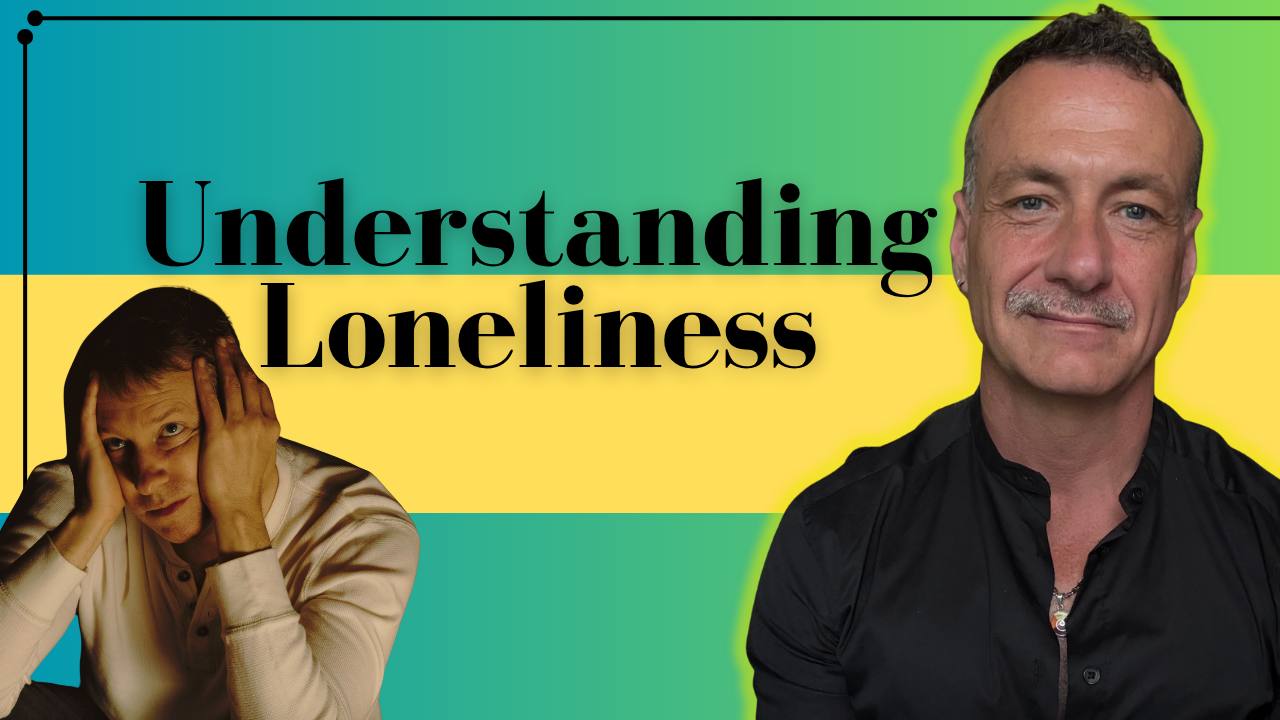
Loneliness. It's one of those words we throw around constantly in recovery circles—right up there with "connection" and "self-care." But what does it actually mean? And more importantly, what do we do about it?
Here's what I know from working with hundreds of men in recovery: loneliness is consistently one of the top three reasons people relapse. It's that Friday night feeling when everyone else seems to be out living their best lives while you're home alone. It's scrolling through Instagram and feeling more disconnected with every swipe. It's that gnawing sense that something is missing, even when you're surrounded by people.
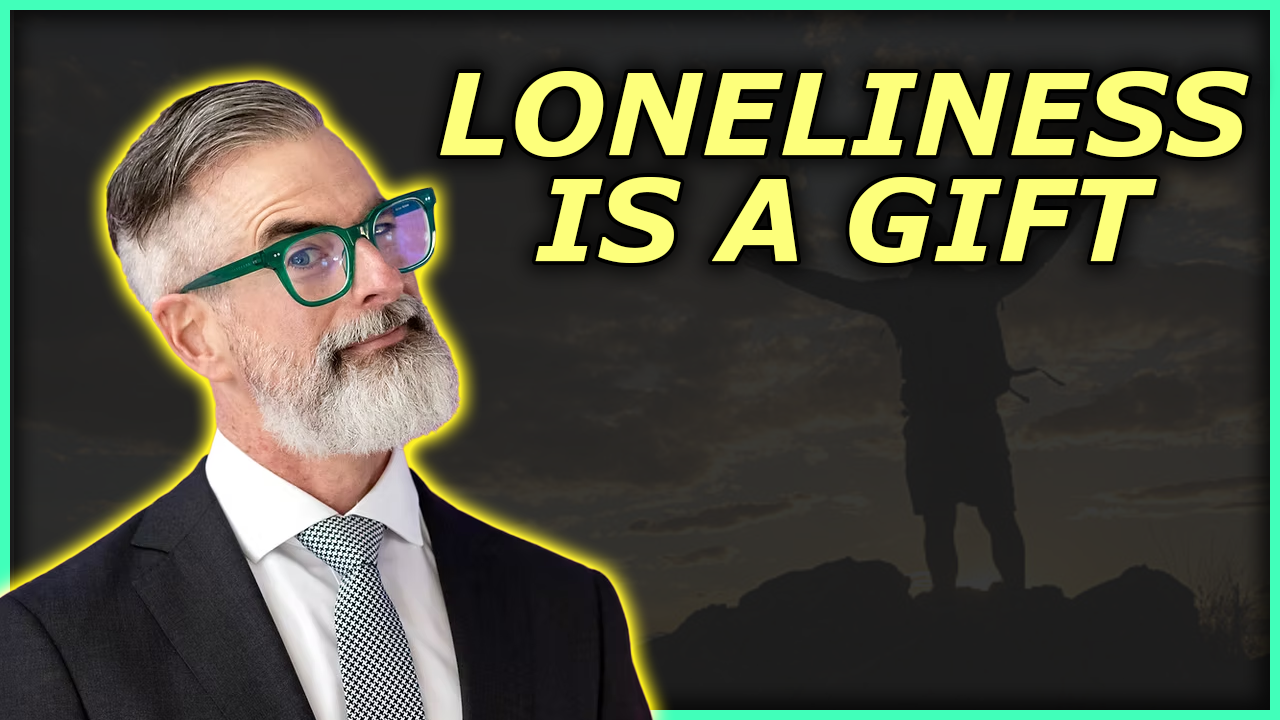
In this conversation with Phil McAuliffe—someone who's dedicated his entire career to understanding and addressing loneliness—we're going beyond the surface-level advice. We're not going to tell you to "just connect more" or "get out there." Instead, we're exploring what loneliness actually is, what it's trying to tell us, and how we can work with it rather than against it.
This matters for all of us, whether you're solidly in recovery or still using and trying to figure out your next move. Loneliness doesn't discriminate, and understanding it might be the key to staying sober or finally deciding to get help.
Let's dive in.
Dallas 💚
Loneliness as Signal, Not Symptom
Phil McAuliffe describes loneliness not as a problem to be solved, but as a gift—a signal that our connection needs aren't being met. Just like hunger tells us we need food and thirst tells us we need water, loneliness is our body's way of saying, "Slow down. You're not getting the social connection you need and deserve."
This reframing is crucial because most of us spend enormous energy trying to avoid feeling lonely rather than listening to what it's trying to tell us. We reach for our phones, we scroll through apps, we hook up, we use—anything to make that uncomfortable feeling go away. But ignoring loneliness only makes it deeper. The longer we avoid it, the more it owns us.
The first step isn't fixing loneliness. The first step is acknowledging it. Being able to say "I feel lonely" is an enormous victory. You cannot address something you don't acknowledge, and until you own your loneliness, it will own you.
Reflective Question: When you feel lonely, what is your first impulse? Do you acknowledge the feeling, or do you immediately reach for something to distract yourself from it?
Action Exercise: The next time you notice loneliness creeping in, pause before reaching for your phone or any distraction. Set a timer for five minutes and simply sit with the feeling. Notice where it lives in your body. Notice what thoughts accompany it. Write down what you observe without judgment.
The Social Media Trap: Drinking Salt Water When Thirsty
Phil offers a powerful metaphor for understanding why social media often leaves us feeling worse: reaching for social media when lonely is like drinking salt water when thirsty. You're alone on a raft in the middle of the ocean, dying of thirst, and there's water everywhere. You reach over and start drinking. It satisfies the need to drink something, but ultimately it does you more harm—or at least different harm.
The platforms are designed for this to happen. They're meant to keep us scrolling, tapping, refreshing. But the connection we get from social media is passive. We can see them, but they can't see us. And that's not real connection.
The same applies to hookup apps. They can be powerful tools for connection, but only if we use them intentionally. Too often, we let them use us instead. We scroll mindlessly, we seek validation, we arrange encounters that leave us feeling emptier than before. The question becomes: Are we using these tools to genuinely connect, or are we using them to numb?
Real connection requires real-time response. It requires someone to see us and for us to see them. It requires vulnerability and reciprocity.
Journal Prompt: Reflect on your relationship with social media and apps. Are they serving your genuine need for connection, or have they become your "salt water"? What would change if you used them more intentionally?
Getting Curious About Your Loneliness
When loneliness hits—and it will hit—you have a choice. You can reach for the phone, for shopping, for sex, for substances. Or you can get curious.
Phil introduces the concept of different types of loneliness, each requiring different responses:
Social Loneliness occurs when you don't have enough people around you. The solution is relatively straightforward: you need to be around more people. This might mean joining a group, attending meetings, volunteering, or simply spending time in communal spaces.
Emotional Loneliness happens when the people in your life don't know you—the real you. You might have plenty of people around, but if they don't know your struggles, your fears, your authentic self, you'll still feel isolated. The solution requires vulnerability: letting people see you as you truly are.
Existential Loneliness is the deep, fundamental aloneness of being human. It's the awareness that no one can fully understand your experience, that you are ultimately alone in your consciousness. This type of loneliness isn't necessarily something to "solve"—it's part of the human condition. But understanding it can help you stop trying to make it go away and instead find ways to live with it peacefully.
Getting curious means asking yourself: Which type of loneliness am I experiencing right now? What is it telling me I need?
Reflective Question: Think about the last time you felt deeply lonely. Which type of loneliness were you experiencing—social, emotional, or existential? What did you need in that moment that you weren't getting?
The Connection Account: Making Deposits and Withdrawals
Phil introduces the concept of a "connection account"—similar to a bank account, but for relationships. Every interaction we have either makes a deposit or a withdrawal. Meaningful conversations, quality time, vulnerable sharing—these are deposits. Canceling plans, being unavailable, surface-level interactions—these are withdrawals.
Most of us are operating in "connection debt." We're making far more withdrawals than deposits, and then we wonder why we feel so isolated. Recovery requires us to actively manage this account, to be intentional about making deposits not just with others, but allowing others to make deposits with us.
This means showing up. It means being present. It means letting people matter to us and letting ourselves matter to them. It means risking disappointment and rejection because the alternative—staying safe and small—means staying lonely.
Action Exercise: Think of your closest relationships as connection accounts. Make a list of three people you care about. For each one, identify one concrete deposit you can make this week—a phone call, a coffee date, a vulnerable text. Then follow through.
The Shame Underneath the Rock
Phil shares that when we kick over the rock of loneliness, what we find underneath is shame and trauma. Many of us immediately want to put the rock back and return to our safe, small existence. Life wasn't that bad before we looked, right?
But here's the truth: acknowledging loneliness and facing the shame underneath is how we move forward. Shame thrives in secrecy. It feeds on our unwillingness to be seen. When we can say "I'm lonely" out loud—to a friend, a counselor, a support group—we begin to dismantle shame's power over us.
This is especially important for gay men in recovery from chemsex addiction. We often carry layers of shame: shame about our sexuality, shame about our substance use, shame about the ways we've sought connection through sex and drugs. Loneliness becomes another thing to hide, another closet to stay in.
But as Dallas emphasizes in the conversation: we've come out of so many closets already. We've come out as gay, as addicts, as HIV-positive, as meth users. Coming out as lonely is just one more door to walk through, and like all the others, there's liberation on the other side.
Phil experienced this firsthand. When he finally said "I'm lonely" to a counselor, he was met with pity and attempts to fix it—responses that felt wrong and unhelpful. It wasn't until he found people who could simply witness his loneliness without trying to make it go away that the path forward began to reveal itself.
Journal Prompt: What shame lives underneath your loneliness? What are you afraid people will think or feel if they truly know how isolated you sometimes feel? What would it mean to share this with someone safe?
Reflective Question: Who in your life can you trust to hear "I'm lonely" without trying to immediately fix it or making you feel pitiful? If no one comes to mind, where might you find this kind of support?
The 3 AM Emergency Call List
One of the most practical tools Phil offers is the "3 AM emergency call list" exercise. It's simple but profound:
Question 1: It's 3 AM and you're having an emergency. Who is on your call list?
Question 2: It's 3 AM and someone else is having an emergency and they call you. Do you answer?
Question 3: Who is on both lists?
Those people—the ones who would call you and whom you would answer for—they're your people. They're your core. Everyone else might be friends, acquaintances, colleagues, but these are the relationships that matter most. These are the people who can help you feel your feelings without trying to make them better.
Having even one or two people on this list means you're winning at life. You can do great things with that foundation. And if your list is empty? That's not a judgment—it's information. It tells you that building these deeper connections needs to be a priority in your recovery.
Action Exercise: Create your 3 AM emergency call list. Be honest. Then consider: if your list is shorter than you'd like, who might have the potential to become that person? What small deposit can you make toward building that kind of trust?
Asking for What You Need
One of the most challenging aspects of addressing loneliness is learning to ask for what we actually need. Many of us, especially as men, have been socialized to tough it out, to not burden others, to handle things on our own. Phil notes that for many Australian men (and men globally), asking for help is so difficult that some would rather take their own lives than reach out.
When Phil finally did ask for help, he was met with "thoughts and prayers" responses—well-meaning but ultimately empty gestures. The people he reached out to weren't willing or able to give him what he actually needed. This taught him the importance of being specific about what kind of support we're seeking.
Do you need someone to just listen? Say that. Do you need practical help? Ask for it. Do you need someone to sit with you while you feel your feelings without trying to make them better? Tell them exactly that.
Dallas shares a powerful distinction: "Don't try to make me feel better. I want to feel this better." The goal isn't to escape the uncomfortable feeling—it's to have someone present with us while we experience it fully.
This requires vulnerability. It requires risking rejection. It requires trusting that our needs are legitimate and that we deserve to have them met. For those of us in recovery, this might be one of the hardest skills to develop. But it's also one of the most crucial.
Reflective Question: When was the last time you clearly asked someone for what you needed, rather than hoping they would figure it out? What made that difficult or easy?
Action Exercise: Practice asking for what you need in a low-stakes situation this week. It could be as simple as asking a friend to listen without offering advice, or asking someone to check in on you during a difficult time. Notice what it feels like to make your needs explicit.
Moving Forward: Loneliness as Ally
By the end of this conversation, Phil offers a different way to think about loneliness: not as an enemy to be defeated, but as an ally that reminds us what we need. We can turn loneliness into a friend. We don't have to like it—it kind of smells a bit and we wish it wouldn't visit so often—but it's here to remind us, to point us toward connection.
This shift in perspective changes everything. Instead of feeling broken because we're lonely, we can recognize that we're human. Instead of numbing or distracting, we can get curious. Instead of staying safe and small, we can risk being seen.
For those of you in active recovery: loneliness will show up. It's part of the territory when you remove substances that were filling the void. But now you have tools. You understand what loneliness is trying to tell you. You can distinguish between different types of loneliness and respond accordingly. You can build your connection account intentionally.
For those of you still using: if loneliness is one of the things keeping you trapped, consider that you might be drinking salt water. The connections you're seeking through substances and apps might be making your thirst worse, not better. There's another way to address this fundamental human need, and it starts with acknowledging it.
Journal Prompt: Imagine loneliness as a messenger rather than an enemy. What message has your loneliness been trying to deliver? What would change if you listened to it with curiosity instead of resistance?
Closing Thoughts
I hope this conversation has given you new tools for understanding and working with loneliness. It's not easy work—feeling our feelings rarely is. But every closet we come out of is liberating. We've done it before with our sexuality, with our addiction, with our status. We can do it with our loneliness too.
Get curious. Ask for what you need. Make deposits in your connection accounts. Build your 3 AM call list. And remember: loneliness is a signal, not a failure. Listen to it, learn from it, and let it guide you toward the meaningful connections you deserve.
You're not alone in feeling alone. And there's power in that paradox.
Keep going.
Dallas 💚
For more resources on recovery, connection, and living authentically, visit www.drdallasbragg.com

Responses