
When I think about the men I work with, one of the most common things I hear is, "Dallas, I don't have trauma." They can't pinpoint a single catastrophic event — no abuse, no neglect in the traditional sense. And yet, here they are, deep in chemsex, wondering how they got here.
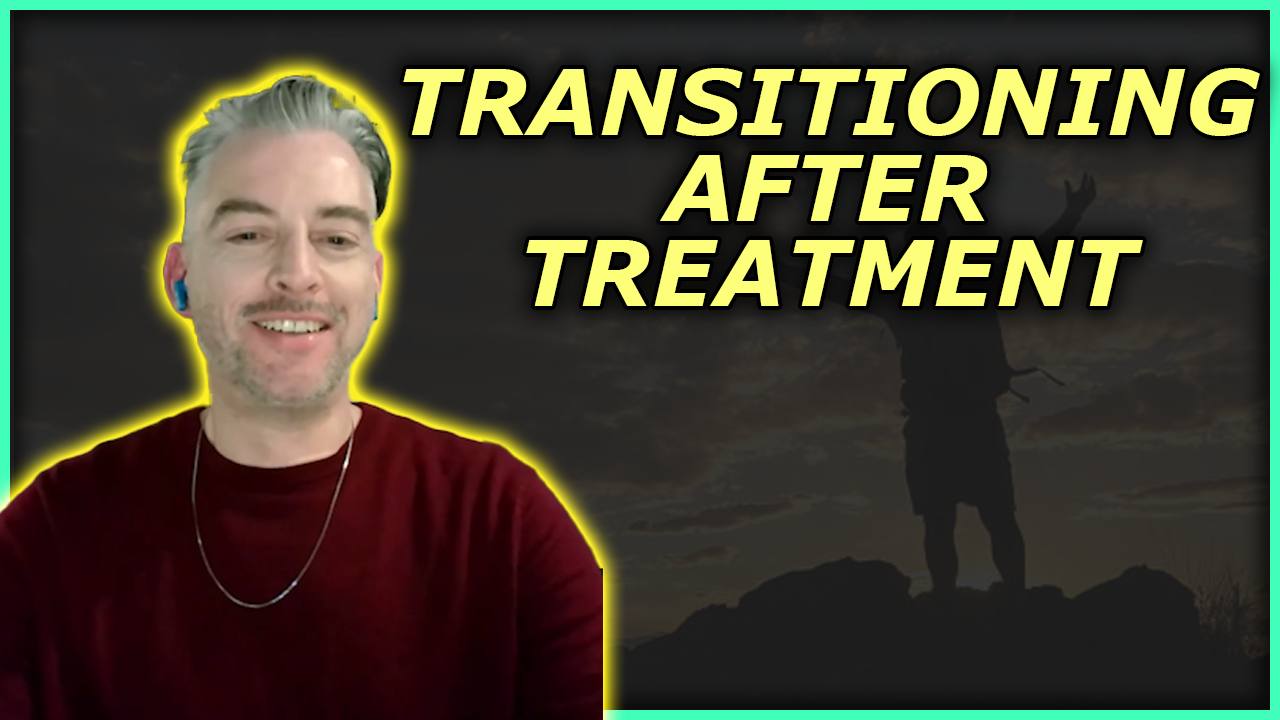
Matthew's story is one of those. He grew up in a loving home in West Virginia with parents who expressed affection, an identical twin brother, and a family that did the best they could. But as you'll hear, the road to meth doesn't always start with a dramatic event. Sometimes it starts with a casual comment — "you're the smart one" — and a lifetime of trying to live up to it.
This conversation challenged me, moved me, and reminded me why I do this work. If you've ever felt like you're never enough, like you've been performing your whole life just to earn love, this one's for you.
The "Never Enough" Wound
Matthew's story begins not with meth, but with a quiet, invisible wound: the belief that he was only valuable when he was excelling. As an identical twin, he was constantly compared to his brother from birth. When his father casually told him he was "the smartest" of the kids, it didn't just land as a compliment — it became a contract. Intelligence became the price of admission for love, belonging, and identity.
This is something so many of us carry without recognizing it. We attach our worth to performance — whether it's being the smartest, the most attractive, the most successful, or the most sexually desirable. And when we inevitably fall short of that impossible standard, we don't just feel disappointed. We feel fundamentally unworthy.
Matthew pursued five degrees. He built a career in cardiovascular medicine, one of the most demanding specialties in healthcare. And none of it was ever enough. The void just kept getting deeper. If you recognize this pattern in yourself — this relentless striving that never brings peace — pay attention. This is where the work begins.
Reflective Question: What is the "contract" you made with yourself early in life? What did you believe you had to be or do in order to deserve love?
Identity Built on Comparison
Being a twin gave Matthew's wound a unique shape, but the underlying dynamic is universal. From a young age, people pointed out the differences between him and his brother — who was taller, who was more athletic, who did better in school. Matthew internalized this as a framework for understanding his own value: he was always measuring himself against someone else.
For many men in our community, comparison is woven into the fabric of daily life. We compare bodies, careers, sexual desirability, follower counts, relationship status. And apps like Grindr turn that comparison into a marketplace where our worth gets reduced to a profile photo and a set of stats. Matthew described how his first taste of external validation came through Instagram at 15 or 16 — a stranger telling him his eyes were pretty. That single comment became addictive because it was the first time someone chose him, not "the twins."
This is the same engine that drives chemsex for so many of us. On meth, you're not the less-than twin, the awkward one, the guy who doesn't fit in. You're desired. You're the center of attention. You're chosen. Understanding that you've been running this comparison program since childhood is the first step toward shutting it off.
Journal Prompt: Who or what have you been comparing yourself to most of your life? Write about a specific moment when comparison made you feel "less than" — and then write what you would say to yourself in that moment now.
Meth as a Mirror
One of the most powerful insights Matthew shared is that meth didn't create his problems — it reflected them. Every feeling meth gave him — confidence, desirability, worthiness, belonging — was something he was desperately lacking within himself. The drug simply filled the gaps that a lifetime of self-abandonment had carved out.
This reframing is essential. So many of us vilify meth, and understandably so. We've lost careers, relationships, health, and dignity. But when Matthew stopped treating meth as a villain and started looking at what it was showing him, everything shifted. He wrote a goodbye letter to meth that started with anger — "you deceived me, you lied to me" — and by the third page had transformed into recognition: "You served a purpose. You showed me what was missing."
I say this often and I know it sounds counterintuitive, especially early on: meth was a gift. Not because the experience was good, but because it stripped away every false identity — the impressive career, the degrees, the curated appearance — and forced Matthew to confront the only thing that was left: himself. The question isn't "how do I get back to who I was before meth?" The question is "who am I without all the armor I built?"
Reflective Question: What feelings did meth give you that you struggle to access on your own? What does that tell you about what needs healing?
Action Exercise: Write your own goodbye letter to meth (or chemsex, or whatever substance or behavior brought you here). Start with how you feel about what it took from you. Then shift — write about what it showed you. What did it reveal about what was missing inside?
The Perfectionism Trap
Matthew described a life organized entirely around avoiding criticism. If his exterior looked flawless — the degrees, the job, the apartment, the body — then no one could find the cracks. He called it a fortress, but admitted it was a thin film. Pull back just a little and the cracks were deep.
Perfectionism isn't about having high standards. It's a survival strategy born from the belief that if you're perfect, you'll finally be safe from rejection. For Matthew, it manifested as never saying no at work, overextending himself, people-pleasing compulsively — all to maintain the illusion that he had it together. And when the opportunity came for an advanced degree program, the one thing that was supposed to finally prove he was "enough," he self-sabotaged. Not because he was lazy or didn't care, but because a deeper part of him didn't believe he deserved it.
This is one of the most painful dynamics in recovery. We build our lives around achievement, and then when something genuinely good shows up, we burn it down because our core belief says we're not worthy. If you've experienced this — torpedoed a relationship, quit a job, ghosted an opportunity — it's not because something is wrong with you. It's because an old wound is still running the show.
Journal Prompt: Describe a time you sabotaged something good in your life. Without judging yourself, what were you afraid would happen if you succeeded?
Action Exercise: Identify one area of your life where perfectionism is currently operating. This week, deliberately do something "imperfectly" in that area — leave a task at 80%, say no to a request, let something be good enough. Notice what feelings come up.
What Is True and What Is a Story?
One of the tools that became a turning point for Matthew is a question I use regularly with clients: What is true and what is a story? When a family member stopped communicating with him, Matthew's mind immediately constructed an entire narrative — they hate me, they'll never forgive me, I'm a failure, we'll never reconcile. The only provable truth? They weren't talking to him. Everything else was a story his wounded mind created to confirm its deepest belief: that he wasn't good enough.
We do this constantly. Someone doesn't text back — they must be angry. A date doesn't work out — I'm unlovable. A colleague gets promoted — I'll never succeed. The stories feel so real that we treat them as facts, and then we act from that place of assumed rejection. For many of us, meth became the escape from stories that had become unbearable.
Learning to separate fact from narrative doesn't mean your pain isn't real. It means you stop letting your wounded inner child write the script for your adult life. The next time you spiral into a story about yourself, pause. Ask: what can I actually prove? What am I adding?
Reflective Question: What is a story you've been telling yourself about why someone in your life pulled away? What are the only provable facts?
Journal Prompt: Write down three beliefs you hold about yourself that feel absolutely true. For each one, ask: where did this belief come from? Is it a fact or a story someone else handed me?
Self-Compassion as the Gateway
The real turning point for Matthew came not from a clinical technique or a medication adjustment, but from a single question I asked him in our first session: What would it look like to date yourself? What would it look like to be in a relationship with you?
He broke down. He realized he had never considered himself worthy of his own love. He had locked away his authentic self and spent years performing for the world — a different version of Matthew for every setting, a chameleon who matched his environment to earn approval. Sound familiar?
Self-compassion isn't a soft skill. It's the foundation of everything. Matthew began by offering compassion to the boys who bullied him in middle school — recognizing that their cruelty came from their own wounds, not from anything about him. And slowly, that compassion turned inward. He stopped identifying with shame. He stopped calling himself an addict and started calling himself Matthew. He stopped judging his past and started seeing it as the path that brought him to himself.
If you take one thing from this episode, let it be this: the men who stay in recovery are the ones who learn to stop judging themselves. Not the ones with the most willpower or the best support system. The ones who find compassion for every version of themselves — including the one who used.
Reflective Question: If you were to "date yourself," what would you discover? What parts of you have you locked away that deserve attention?
Action Exercise: Tonight, or whenever you have a quiet moment, try the exercise Matthew's rehab counselor gave him. Hold a pillow and visualize your younger self — the version of you before the world told you who to be. Tell him what he needed to hear. Let yourself feel it.
Dropping the Suitcases
Matthew used an analogy that stuck with me: he was carrying suitcases that didn't belong to him. The suitcase labeled "you're not good enough" — that was handed to him by schoolyard bullies. The one labeled "you have to prove yourself" — that came from a system that compared him to his brother. The one labeled "you don't belong" — that was packed by a culture that told him being gay was something to be ashamed of.
At some point, Matthew looked at those suitcases and realized: I didn't buy this luggage. It doesn't have my name on it. And he set them down.
This is the work. Not fixing yourself, because you were never broken. Not becoming someone new, because the truest version of you has been there all along, buried under other people's projections. The work is recognizing what's yours and what was handed to you, and having the courage to stop carrying what isn't yours.
Journal Prompt: What "suitcases" are you still carrying that don't belong to you? Who packed them? What would it feel like to set them down?
Reflective Question: Matthew said, "In the death of those identifiers, I found life." What identity or title are you most afraid of losing? What might you find underneath it?
Action Exercise: Write down the roles and labels you use to introduce or define yourself — your job title, your relationship status, your body, your intelligence, your past. Cross out each one. What's left? Sit with that. That's you.
Stop Judging and Start Living
I want to close with something that might be the most important lesson in Matthew's story and in my own recovery. Judgment is the glue that keeps destructive patterns stuck to us. Every time you label something you've done as "bad" or "wrong" or "shameful," you pull it closer. You feed it energy. You make it part of your identity.
Matthew noticed that when he stopped judging meth — when he stopped casting it as this malicious force that destroyed his life — it lost its draw. The same was true for me. When I stopped judging myself for wanting to hook up, for wanting validation, for all the "dark and dirty" things I'd done, the compulsive patterns dropped within weeks. Because the lesson was never about the behavior itself. The lesson was about the judgment.
If you are stuck in a relapse cycle, I want you to hear this: you will stop relapsing when you stop judging yourself for it. That's not permission to keep using. It's an invitation to approach yourself with the same compassion you'd offer your best friend. Recovery isn't about white-knuckling your way to sobriety. It's about becoming someone who doesn't need the substance because you've finally given yourself what it was providing.
Journal Prompt: What behavior or pattern are you currently judging yourself most harshly for? Write about it without using the words "bad," "wrong," "should," or "shouldn't." Just describe it. Notice how the energy around it shifts.
Action Exercise: This week, when you catch yourself in self-judgment — about using, about a hookup, about not being further along in recovery — pause. Say to yourself: "I have compassion for that." Don't try to fix it. Don't analyze it. Just offer compassion and move on. Track how often this happens in a day. You might be surprised.
Matthew walked into our first session unable to look me in the eye, drowning in shame, completely disconnected from himself. Twelve weeks later, he sat on this podcast and told the world that meth was a gift — not because it was kind to him, but because it burned down every false identity he was hiding behind and left him standing face to face with himself for the first time.
That's the invitation for all of us. You don't have to go back to who you were before meth. You get to become who you were always meant to be. And the path there isn't through more achievement, more perfection, or more punishment. It's through compassion — for yourself, for your story, for the wounded kid who's been running the show.
As Matthew said: "I am not an addict. I am just Matthew. And Matthew is good enough."
If that resonates, I'd love to work with you. Head to www.drdallasbragg.com to learn about our Foundations and Emergence group coaching programs, or reach out about 1:1 coaching. You don't have to do this alone.
Love you guys. 💚 Dallas



Responses