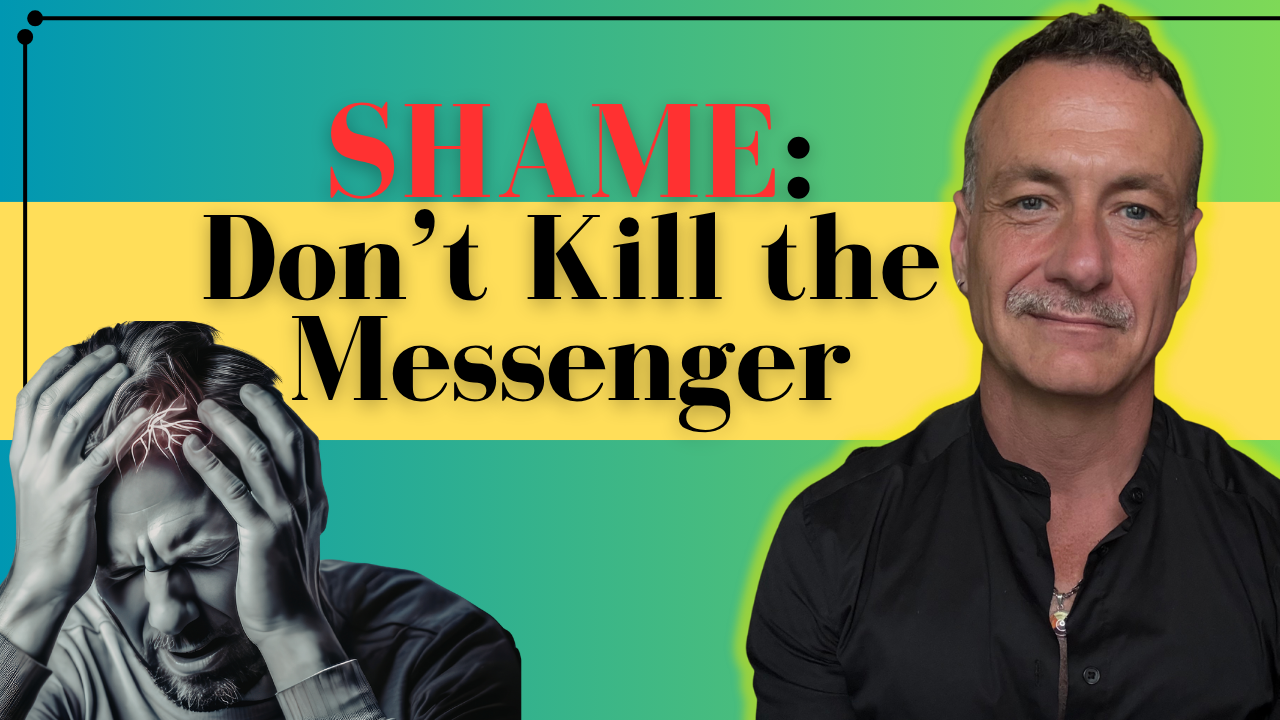
How Shame Keeps You Stuck Instead of Setting You Free
There's a moment I recognize now when I'm sitting with a client.
He'll pause, look down, and then say something like: "I self-sabotage." Or "I'm a cheater." Or "I think I have some kind of neurodiversity thing going on." Or "I'm just broken."
And he'll say it like that explains everything.
Like the case is closed.
I used to nod along. And I'd feel a bit stumped because typically my job is to steer the client toward shame awareness. So, when they bring it to me before I can get them there, what's next?
Now I get curious—because what I've learned is that shame identifiers like these aren't explanations. They're exits. They're the door we walk through to avoid the room we actually need to enter.
Here's what I want to offer you today: shame is real, it's valid, and it deserves to be healed.
But sometimes we use shame not as something to move through—but as something to hide behind. And that distinction is everything.
When Shame Becomes a Shortcut