A Note Before You Begin
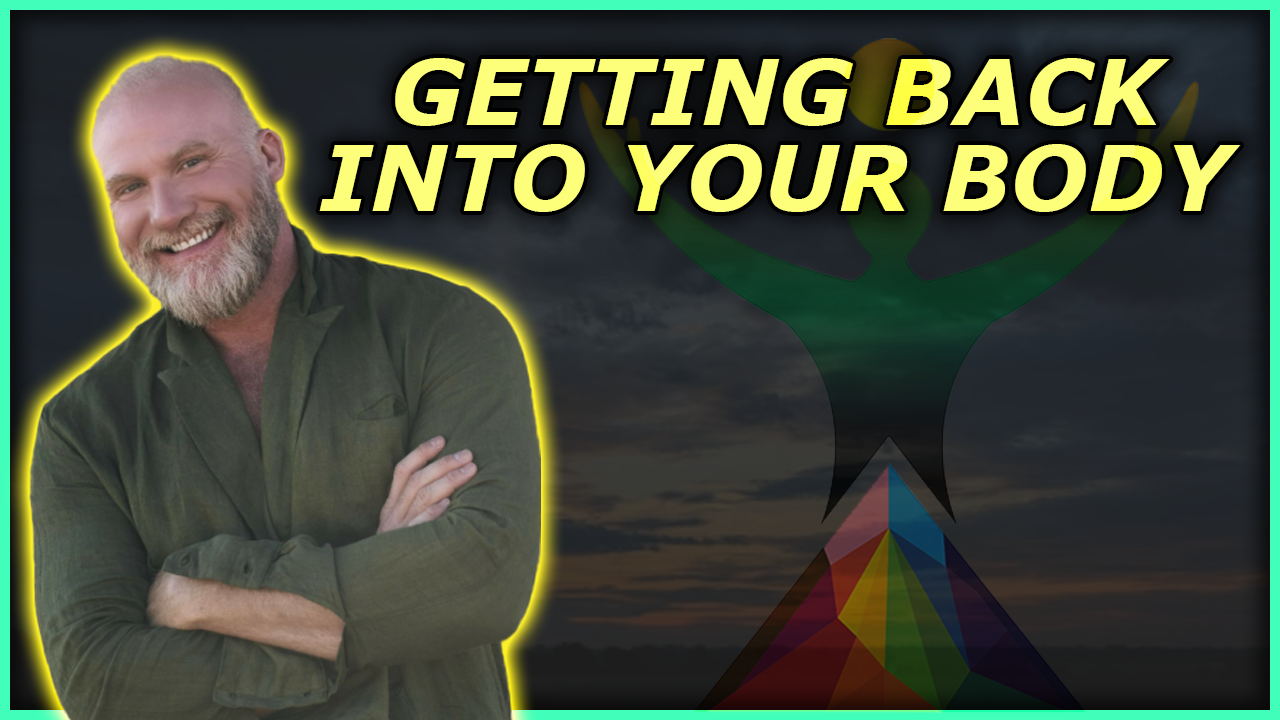
This episode is for you — whether you're in the thick of recovery or still figuring out if change is something you want. It's for the man who wonders why sobriety didn't automatically fix his relationship to sex. For the guy who quit meth but feels like a stranger in his own skin. For the one who misses the freedom he felt using, even as he knows what it cost him.
Court Vox is a somatic sex and intimacy coach, surrogate partner, and founder of The Body Vox. He works specifically with GBTQ men to help them reconnect with pleasure, embodiment, and erotic identity — without shame, without shortcuts, and without rushing the process. This conversation goes places that recovery spaces rarely go. That's exactly why it matters.
Read slowly. Come back to sections. Use the questions at the end. This isn't a test — it's an invitation.
From Pornographic to Erotic: Reclaiming a Lived Experience of Pleasure
Court opens by drawing a distinction that cuts right to the heart of what meth does to gay men's sexuality. He references the work of Audre Lorde, who wrote about the difference between the pornographic and the erotic. The pornographic is visual, button-pushing, and disconnected from genuine sensation. The erotic — true eroticism — is lived, felt, present. It's about the body from the inside, not the image from the outside.
For many gay men, especially those who came of age in communities shaped by hook-up culture and substance use, the pornographic model of sex is the only one they've ever really known. Meth accelerates this. On the drug, sex becomes spectacle — something you watch yourself doing rather than something you inhabit. When the drug is gone, the spectacle is gone too. What's left is often a body that feels foreign, a libido that's scattered and misfiring, and a nervous system that has forgotten how to feel pleasure without chemical assistance.
Court puts it plainly: meth deteriorates your dopamine receptors. Feeling takes time to come back. And rebuilding a relationship to sensation — to your own body — is not something that happens by stopping use. It's something you have to actively learn.
That's not a discouraging truth. It's actually freeing. It means there's a path. There's something to do. And it starts somewhere most people overlook: learning to touch yourself differently.
Discomfort Is Not the Same as Danger
One of the most useful things Court says in this episode — and one worth sitting with — is this: discomfort is not unsafety. They are not the same thing, and treating them as if they are keeps us frozen.
In recovery communities, trauma language gets used broadly. Sometimes appropriately; sometimes as a way to avoid sitting with things that are hard but not actually harmful. Court is careful here — he's not dismissing anyone's real pain or history of actual harm. But he is pointing to a pattern: many of us have learned to exit any uncomfortable experience as fast as possible. We've built whole identities around avoiding what makes us squirm.
The problem is that eroticism — real, embodied eroticism — lives in the discomfort. The places where shame has lived. The desires we haven't been able to speak out loud. The ways we want to be touched or held or challenged that feel too risky to ask for. Getting to those places requires being willing to sit with the heat of them before reaching for a way out.
This is also true in relationships and in repair. Court speaks movingly about repair as a skill — one that most of us were never taught. The culture of immediate boundary-setting, of cutting people off when things get hard, often isn't courage. It's avoidance. Real intimacy — the kind we want and the kind that heals — requires us to stay in uncomfortable conversations long enough to find out what's on the other side.
Shame, Kinks, and the Drugs That Unlocked the Door
Here's a truth that many men carry into recovery but rarely say out loud: meth felt like freedom.
Not the slow, built kind of freedom. The instant, total-release kind. For a lot of gay men — men who carry the weight of religious shame, family rejection, cultural messaging that their desires are dirty or wrong — meth was a chemical removal of every barrier they'd been raised to maintain. On it, they could want what they wanted, do what they wanted, ask for what they wanted.
And then they got sober. And the desires were still there. And so was the shame.
Court speaks directly to this. He's heard fantasies and kinks from more people than most of us will ever meet. His consistent message: whatever it is you want, you are not alone. There are probably other people like you. There might even be a whole community. The question isn't whether your desires are acceptable — it's whether you can find them in sober, consent-centered spaces where you're actually present for the experience.
Court also makes the important distinction between kinks themselves and the spaces where those kinks have been lived out. A leather scene on meth is a different thing than a leather scene with a sober community that values consent. The kink didn't come from the drug. The drug just temporarily removed your shame about it.
Learning to Trust — Yourself First, Then Others
I want to share something personal here, because I think a lot of you will recognize yourselves in it.
In this conversation, I admitted to Court that I still carry significant distrust of gay men. That after everything I experienced in the chemsex scene — the objectification, the moments where I didn't have full agency over what was happening — I walk into potential connections with my walls already up. I can push men away before they even get a chance to show me who they are.
Court's response was quietly profound. He pointed out that what I was describing wasn't just distrust of other men — it was distrust of myself. Of my own nervous system. My own capacity to read a situation, to speak when something feels wrong, to leave when I need to leave. On meth, that internal guidance system was overridden again and again. Rebuilding it is part of recovery.
And he offered a path: it starts with learning to trust your voice. Trusting that what you want matters. Trusting that your "no" is real and your "yes" can be fully yours. When you begin to believe in your own instincts again, you start to attract — and recognize — men who will honor them.
This doesn't happen all at once. It is a practice. But it begins with the smallest act of speaking something true.
Conscious Sexuality: Being Present for Your Own Experience
Court's core teaching — the thread that runs through everything he offers — is this: conscious sexuality. And it's simpler than it sounds.
It doesn't mean having the right kind of sex, or the most healing sex, or the most spiritual sex. It means pausing to actually notice what's happening while it's happening. What are you feeling? What do you want more of? What are you avoiding? What does your body need?
For men coming out of chemsex, this practice is almost revolutionary. In active use, sex was the opposite of conscious — it was a way of escaping consciousness entirely. Every part of the experience was designed to override presence. Recovery asks us to reverse that, slowly, patiently, without demanding immediate results.
Court frames it as a question you stay in relationship with — not one you answer once and move on: "How can I be in deeper relationship with my own pleasure and my own desires?" It's a mantra, not a destination. The answer shifts. It will be different today than it was a year ago or will be next year. The practice is the asking.
He also speaks about idiosyncratic masturbation — the way we get locked into one narrow path to pleasure, so rigid that any variation feels foreign. Rebuilding your erotic life means slowly, gently widening those pathways. Not all at once. Not with anyone who hasn't earned your trust. But one new sensation, one new honest conversation, one small experiment at a time.
Radical Honesty in Partnership: The Lightning Path
For those of you in relationships — especially if your chemsex use happened while partnered — this section is for you.
Court describes what many of my clients experience but rarely say: after meth, many men find themselves back in monogamous relationships, loving their partner, and feeling absolutely nothing sexually toward them. The meth rewrote their arousal template. The partnership that offers stability and safety can't compete with what the drug manufactured. And so they stay quiet. And they suffer. And so do their partners.
Court's invitation — radical honesty — is not a comfortable one. Telling your partner "I love you and I'm not attracted to you right now" is terrifying. But what opens up on the other side of that conversation might surprise you. Your partner may be holding the same truth. You may both take a breath of relief. You may find yourselves asking — together, finally — "Who are you now? Who am I? Can we learn each other again?"
He calls working with couples "the lightning path." You will get clear, quickly, about whether there is a way forward together. Sometimes there is. Sometimes there isn't. But the clarity itself — after months or years of fog — is a form of healing.
And here is something I believe: the vulnerability of saying the hard thing is itself intimacy. It might be the most intimate moment in the relationship.
Surrogate Partner Therapy: A Note on a Powerful Option
Court is also a surrogate partner — and this is worth knowing about, especially for those of you who feel too frozen to navigate intimacy on your own or with a partner who's also in pain.
Surrogate partner therapy is a triadic model: a client, a licensed therapist, and a surrogate who provides embodied, experiential learning alongside the talk therapy. It can include touch, nudity, and sexual contact — but it is slow, intentional, and deeply clinical. It is not about getting off. It is about rewiring. Learning to feel. Learning to speak. Learning to trust.
Court works with very few clients at a time because of the depth and intensity of this work. He's currently working with someone approaching a year and a half into the process. If you're curious, the starting point is finding a licensed therapist who works with surrogates, and reaching out to Court directly through thebodyvox.com.
It is not for everyone. It is not always accessible. But for some of you reading this, it might be exactly what you've been looking for without knowing it had a name.
A Closing Reflection
The image Court closed with stays with me: walking to the grocery store instead of driving. You get there the same place. But when you walk, you smell things, notice things, feel things you'd miss in a car. You arrive having actually been somewhere.
That's recovery. That's sexual healing. That's the erotic life waiting for you on the other side of this.
It is slower than you want it to be. It asks more of you than you expected. But the man who arrives — present in his body, trusting his voice, capable of real intimacy — that man is worth the walk.
I love you. You've got this.
Dallas 💚
5 Reflective Questions
- When you think about your body right now — not your past with substances, just right now — what words come up? Do you feel present in it, distant from it, or somewhere in between?
- Court talks about the difference between discomfort and unsafety. Think of a moment recently when you avoided something intimate or vulnerable. Was that truly unsafe, or was it uncomfortable? What's the difference for you?
- Do you carry shame around your sexual desires or kinks — things you did or wanted while using? What would it mean to separate those desires from the meth, and to explore them as genuinely yours?
- If you are in a relationship, are you being radically honest with your partner about where you are sexually and emotionally? What is the cost of staying silent — and what might open up if you spoke it?
- Court describes "conscious sexuality" as pausing after a sexual experience to ask: What was that for me? What did I get from it? Have you ever done that reflection? What might you learn if you started?
5 Journal Prompts
- Write about your relationship with your body before meth, during use, and now. How has your sense of bodily ownership shifted? What does coming home to your body look like for you?
- Describe the sexual "template" meth created for you — the speed, the intensity, the disconnection. Now describe, as specifically as you can, what sober, present, embodied sex could feel like. What would you need to feel safe enough to explore that?
- Is there a desire, kink, or fantasy you've been carrying with shame? Write it down without judgment. Then ask: Where did this shame come from — was it yours, or was it handed to you by religion, culture, or someone else's voice?
- Think about trust — with other gay men, with your own body, with your own instincts. Where was that trust broken? What would it take to begin rebuilding it, even just a little?
- Court's colleague Pamela Madsen has a phrase: "Stay in with no promise." Write about a place in your life — in recovery, in a relationship, in your sexual healing — where you've been demanding an answer too soon. What might happen if you stayed in a little longer, with no promise of a specific outcome?
5 Action Exercises
- This week, spend 15 minutes in a mindful self-touch practice — not goal-oriented, not genital-focused. Put on music. Light a candle. Touch your arms, your chest, your face. The only instruction is to slow down and notice what actually feels good. Notice where you feel sensation and where you feel numb. No performance, no outcome required.
- Choose one desire, preference, or boundary you haven't voiced to a partner, a date, or even a close friend. Practice saying it out loud — to yourself first, in the mirror. Then find a safe moment to say it to another person. Notice what happens in your body before, during, and after.
- Make a list of three spaces or communities you've been curious about — leather events, tantra workshops, conscious sexuality groups, somatic therapy — that are sober-affirming. You don't have to go. Just research one. Look at a website. Read a description. Let yourself imagine being there.
- After your next sexual experience — solo or partnered — take five minutes to journal three things: What was present for me? What was I avoiding? What did I want more of? This is the beginning of conscious sexuality practice, and it starts with one honest moment of reflection.
- Identify one area where discomfort and unsafety have been confused for each other in your recovery or your intimacy. Write it down. Then take one small step into that discomfort this week — not to fix it, not to heal it completely, but just to sit with it long enough to ask: what is here for me?
P.S. Want more support on this journey? Visit drdallasbragg.com to learn about Recovery Alchemy coaching and upcoming group programs.
P.P.S. Court Vox's courses, retreats, and private immersions are at thebodyvox.com — and yes, he swims naked on his homepage. Highly recommend.


Responses