I want to be honest with you about something.
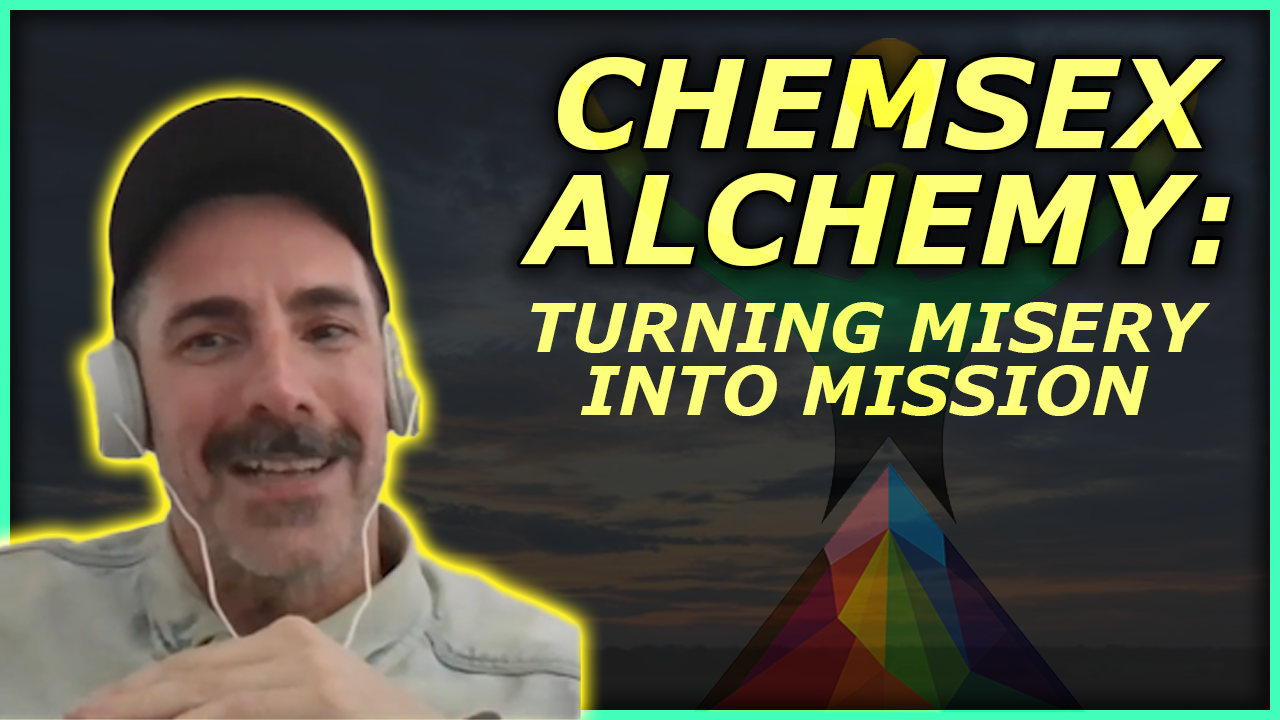
When Darren and I sat down to record this episode, I wasn't prepared for how much of myself I would hear reflected back to me. There were moments in his story — standing in an eviction with nothing, convinced the disaster couldn't possibly be real — where I had to fight to keep it together, because I have been that person. Deluded, high, certain that rock bottom was someone else's address.
What Darren Murphy gave us in this conversation is more than a recovery story. It's a map. A map of how the worst thing that can happen to you can become the exact thing that saves your life — if you make one critical promise to yourself in the middle of it.
Wherever you are right now — still using, early in recovery, or years into sobriety — I believe there is something in this episode that is meant for you specifically. Read slowly. Sit with the questions. This one deserves your full attention.
With love, Dallas 💚
About Darren Murphy
Darren Murphy is the ChemSex Specialist Practitioner at Forward Leeds Drug and Alcohol Service in Leeds, UK — and he helped build that role from the ground up. Before becoming one of the most compassionate practitioners in the chemsex recovery field, Darren lived on the other side of the crisis: years of daily Tina and mephedrone use, dealing to survive, HIV transmission through chemsex, multiple overdoses, and ultimately a 32-month prison sentence for possession with intent to supply.
Today, Darren is seven years abstinent. He works directly with chemsex clients in a person-centred, trauma-informed model, embedding chemsex support into sexual health clinics, LGBT organizations, and wraparound housing and employment services. He is living proof that the pipeline from misery to mission is very, very real.
The Dis-Ease Within: When Drugs Become a Solution
One of the most important things Darren said in this conversation — and I want you to really hear it — is that chemsex and Tina were never just about getting high. They were a solution to a problem.
For Darren, that problem had a name: dis-ease. A deep, pervasive self-loathing that had been running in the background since childhood. Emotional abuse from a stepfather. Bullying rooted in his sexuality. The relentless feeling of being not good enough, not worthy, not real. He described walking into a room of people he knew and feeling like he was shortchanging them just by being there — like a knock-off version of who he was supposed to be.
The moment mephedrone hit his system, all of that went quiet. For the first time, he felt content. Confident. Like the version of himself he had always wanted to be.
This is the seduction that so many of us in the GBTQ community understand intimately. Chemsex didn't just lower our inhibitions — it gave us permission to be someone we couldn't access sober. Confident. Desired. Unafraid. And as I reflected in this conversation, that's not just about sex. That's about the profound pressure so many gay men feel to perform, to belong, to take up space in a world that has spent decades telling us we don't deserve to.
The drug became a shortcut to the self we always wanted. And that shortcut — that's where the trap is set.
The Delusion: What the High Lets You Believe
Darren describes a particular kind of thinking that chemsex and stimulant use produces: the sense that everything is fine, that the big break is coming, that the consequences aren't real. While using, he was convinced he would never go to prison. While using, I was certain I couldn't be evicted. While using, both of us had grand plans — and every single one of them stayed in the cloud of the high.
This is chemical delusion. The drugs don't just make you feel better — they rewire your risk assessment. They make catastrophe feel negotiable. They let you stand in the middle of your life falling apart and think: this isn't actually happening.
If you are still using, I want you to sit with a very uncomfortable question: What is the false belief you are holding onto right now? What is the thing you are certain won't happen to you? Because for Darren, it was prison. For me, it was homelessness. And for both of us, reality eventually showed up — whether we were ready or not.
The high doesn't protect you from the consequences. It just delays your awareness of them.
The Cup of Tea: Finding Your Moment of Decision
Three days into prison, navigating a seven-year comedown from Tina and a plethora of other substances, Darren attempted to end his life. He survived — and in the aftermath, he made himself a massive cup of tea, loaded with sugar, and in the 30 seconds of clarity that followed, he made a promise to himself.
From this moment on, I am going to do everything I can to turn this horrendous situation into a positive one. I don't know how. But this is the promise I make to myself right now.
That's it. That was the turning point. Not a 30-day program. Not a spiritual awakening. Not an intervention from someone who loved him. A cup of sugary tea and a decision.
I tell you this because I want to dismantle the myth that recovery requires a dramatic, perfect, movie-worthy rock bottom. Darren's moment of decision happened in a prison cell, in withdrawal, after surviving a suicide attempt. And it was made from one of the most basic acts of self-care imaginable: making himself something warm to drink.
Your cup of tea might look different. But the question underneath it is the same: When are you going to make a promise to yourself? You don't have to have lost everything. You don't have to wait for the worst to happen. The promise can happen right now, in the middle of your ordinary Tuesday, before things get worse.
The Universe Gives You What You Need, Not What You Want
If there is a single phrase that captures the spiritual core of this episode, it is this one. Darren wanted to keep using. He wanted his life in London, the dealing, the chill outs, the Grindr scroll, the high. That's what he wanted. What the universe gave him was prison.
And in prison, he found rehab. In rehab, he found his vocation. In his vocation, he found the version of himself he had been chasing with every line and every slam for over a decade.
I made a similar observation in our conversation: everything is happening for you, not to you. This is not a platitude. This is a radically different way of experiencing the events of your life — including the painful ones. Darren lost his mother to COVID in 2020, but he was sober for the year before she passed. He got to have her. If prison hadn't happened, he wouldn't have had that year.
Can you hold that? Can you look at the hardest thing that has happened in your life — the loss, the arrest, the diagnosis, the partner who left, the job that disappeared — and ask honestly: What if this is happening for me?
You don't have to believe it all the way. You just have to crack the door open.
Need to Quit vs. Want to Quit: The Difference That Changes Everything
This is the part of the conversation I want every single person listening to sit inside for a long time.
Darren knew for years that he needed to stop. He contracted HIV and kept using. He overdosed on G and kept using. He lost massive amounts of weight, developed slamming injuries, was raided by police — twice — and kept using. The need was everywhere. It was screaming at him. And it wasn't enough.
The want was different. The want only arrived when he could no longer imagine himself as someone who used. When the internal voice that said you could do one more slam if you really wanted to had gone completely silent. When he accepted — not just admitted, but accepted — that he could not use Tina successfully, ever, and that this was not a punishment but simply the truth of who he was.
There is a critical distinction between admitting and accepting. Darren wore his addiction like a badge of honor for years — yes, I'm an addict — while a quiet internal voice whispered, but you could stop if you really tried. Acceptance is when that voice disappears. Acceptance is when quitting is not about what you might lose, but about who you are choosing to become.
If you are quitting because your partner is threatening to leave, or because your family wants you to, or because society says meth is bad — those reasons may not hold. The day the pressure lifts, the want may go with it. The sustainable reason to stop is the moment you look at your life and say: this is not who I am anymore. I am making a pledge to myself to show up as the best version of me. That is a want. And it will carry you when nothing else can.
Building Wraparound Recovery: You Don't Have to Figure It Out Alone
One of the things that moved me most in this conversation is how clearly Darren understands that early recovery is not just about stopping — it's about learning to navigate life again from scratch. He described the feeling of emerging from active chemsex addiction like a baby learning to walk. Basic adult tasks — opening a bank account, attending a medical appointment, navigating transit — become monumental when your brain is rebuilding itself.
Darren's work at Forward Leeds is built on this understanding. His model isn't just about addressing substance use. It's about wraparound support: housing, sexual health, employment, community. It's person-centred, meaning the client sets the goals. It meets people where they are — including harm reduction for those who aren't ready to stop entirely.
If you are looking for support, the model Darren describes gives you a framework for asking better questions. Does this service help me set my own goals? Can they support more than just my drug use? Do they understand chemsex specifically? Are they trauma-informed and LGBTQ-affirming? You deserve services that can hold the whole of you — not just the part that is struggling with substances.
From Supplier to Specialist: When the Mission Finds You
There is something almost unbearable about the detail Darren shared near the end of our conversation: that sometimes, when he sits with a client and maps out a timeline of their chemsex use, the timeline traces back to the period when he was supplying Tina in Leeds. The men he once supplied are sometimes the men he is now trying to help heal.
He described that as a slap in the face — and meant it in a positive way. A reckoning. A reason to keep showing up.
His story is not a cautionary tale. It is a testament to the idea that the path through your worst experience can become the exact foundation for your most meaningful work. His lived experience — the prison, the HIV diagnosis, the years of using — is not a liability in his practice. It is a resource. It is the thing that allows him to sit across from a client and say, without performance, I know. I have been there. And I am here.
You may not become a chemsex specialist. But your experience — all of it — is not wasted. It is material. The question is what you are going to build with it.
Reflective Questions
Take your time with these. There are no right answers — only honest ones.
1. When you were using, what version of yourself did the substances help you access? Was there a confidence, a freedom, or a connection that felt impossible to reach without them?
2. Is there a consequence you have told yourself "couldn't really happen" to you? What would it take for you to take that possibility seriously — before it becomes a reality?
3. Think of a painful event in your past — something you once experienced as purely negative. With the perspective you have now, can you identify any way that event was also working for you, even if you couldn't see it at the time?
4. Honestly, where are you right now — in the need or the want? Are you considering change because of external pressure, or because something inside you has shifted? There is no wrong answer. Just the honest one.
5. What would a "wraparound" support system look like for you specifically? Beyond stopping use, what areas of your life — relationships, health, housing, identity, purpose — need tending?
Journal Prompts
Find a quiet space. Write without editing yourself.
1. Write about the internal "dis-ease" that existed before you ever used. What were you carrying? What were you trying to silence or escape? Be as honest as you can — this is for you alone.
2. Describe your "cup of tea moment" — the moment, or the potential moment, where you could make a promise to yourself. What would that promise sound like in your own words? Write it down as if you are speaking directly to yourself.
3. Write about a current difficulty in your life — something that feels like it is happening to you. Now rewrite it as if it is happening for you. What would that shift in perspective open up? What might become possible?
4. Describe the version of your daily life that you want to be living in one year. Be specific. Where are you living? What does your morning look like? What are you doing with your time? Who is in your life? Let yourself want things.
5. What would it mean to turn your experience with chemsex and addiction into something useful — for yourself or for others? You don't have to have a plan. Just let yourself imagine what your misery, transformed, might make possible.
Action Exercises
These are meant to be done, not just read. Pick one to start.
1. Write down the top three consequences of your use that you have been minimizing, rationalizing, or convincing yourself don't really count. Don't filter. Don't justify. Just name them clearly. Read what you wrote out loud.
2. Make yourself something warm this week — tea, coffee, whatever feels right — and sit with it quietly for five minutes. No phone. No distraction. In that five minutes, ask yourself what promise you are ready to make. You don't have to have all the answers. Just make the promise.
3. Write two lists. On the first, write every external reason you have to stop using or stay sober — things outside yourself pushing you toward change. On the second, write every internal reason — the ones rooted only in who you want to be. Look at both. Which one feels more solid?
4. Identify one practical barrier in your life right now that feels unrelated to recovery but is actually making recovery harder — financial stress, housing instability, health concerns you've been avoiding, social isolation. Research one resource, one organization, or one person who could help with that specific thing. You don't have to reach out today. Just find the number.
5. Think of one person in your life — someone still struggling, someone in early recovery, someone who feels alone in what they're going through — and reach out to them this week. Not to give advice. Not to fix anything. Just to say: I see you. I've been there. You're not alone. That act of connection is the beginning of turning your story into a mission.
A Closing Word
If Darren Murphy can make a promise to himself in a prison cell, three days into withdrawal, after the worst moment of his life — you can make a promise to yourself today.
You don't need the perfect conditions. You don't need to have hit your rock bottom. You don't need to have lost everything or nearly lost your life. You just need a moment of stillness and the willingness to hear the part of you that already knows: this is not who I am.
Recovery is not built in a day. But it is built on a decision — one you make, and then keep making, even when it's hard. Darren made his over a cup of tea. You might make yours reading these words right now.
I hope you will.
Love you, Dallas 💚
P.S. If this episode stirred something in you and you're ready to explore what support could look like, I'd love to connect. Head to drdallasbragg.com to learn more about working together.
P.P.S. The study guide for every episode lives on the blog at drdallasbragg.com. Subscribe to get them delivered directly to your inbox — they're your companion for this journey.

Responses