Content Warning: This study guide discusses chemsex, substance use, harm reduction approaches, relapse, and addiction recovery. Some content may be triggering for those in early recovery or those currently struggling with substance use.
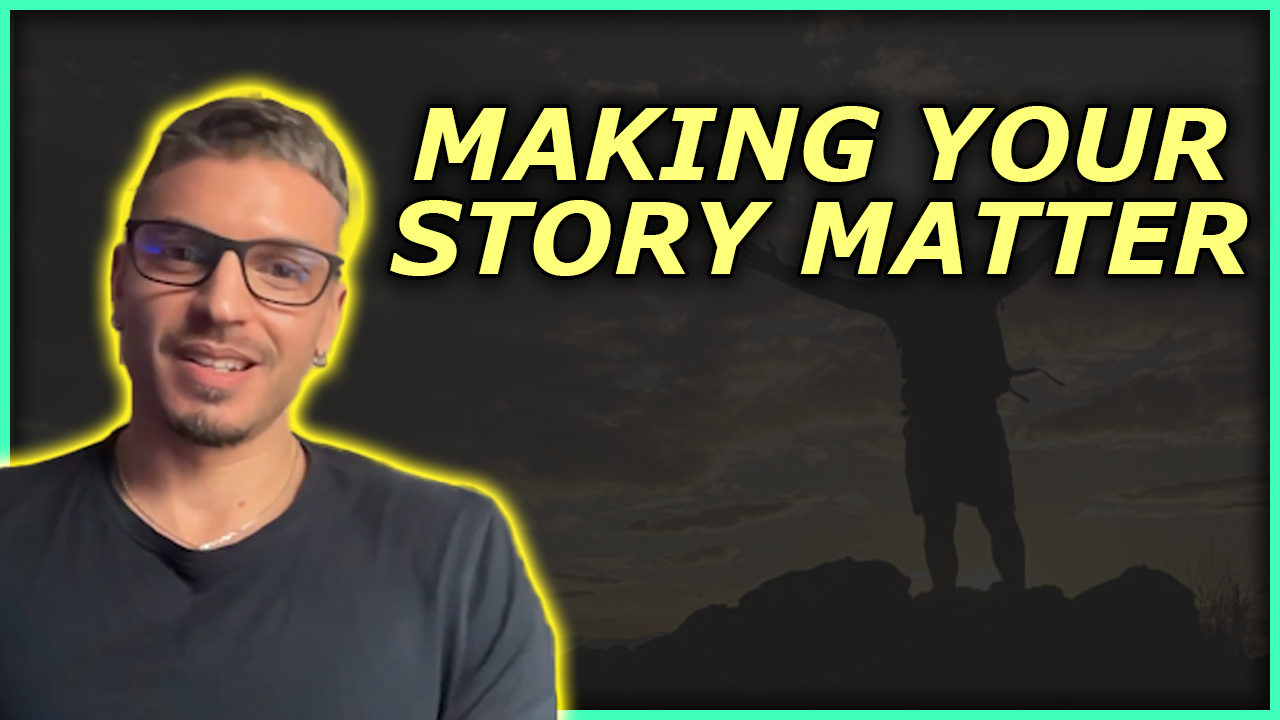
When Giulio Spatola reached out to participate in this conversation, I knew we were about to have something special. Here's someone who's using one of the most visible platforms in the LGBTQ+ community—Mr. Gay World—to talk about one of our most stigmatized issues: chemsex addiction.
What struck me most about this conversation wasn't just Giulio's courage to speak openly about his own journey with chemsex, but his clarity about why we need to talk about it differently. He's not just sharing his story; he's dismantling the very framework that keeps so many of us silent and ashamed.
This study guide explores the themes that emerged from our conversation: breaking stigma, understanding addiction more broadly, embracing harm reduction, reframing relapse, and using our voices for advocacy. Whether you're currently struggling, in recovery, or supporting someone who is, these insights offer a more compassionate and realistic approach to healing.
The Weight of Stigma and the Fear of Being Seen
One of the most powerful moments in our conversation came when Giulio and I discussed why so many people are terrified to engage publicly with chemsex recovery content. I see this constantly—men who DM me privately, who hire me as their coach, but won't follow my page or interact with my posts because they're afraid of being "linked" to chemsex.
Giulio explained this fear perfectly: society tends to demonize drug addiction as uniquely wrong, while ignoring that addiction is a much broader phenomenon. We stigmatize crystal meth use while normalizing compulsive behaviors around alcohol, shopping, social media scrolling, and pornography. The mechanism at the base is identical—the dopamine reward system—but we've created arbitrary hierarchies about which addictions are acceptable to admit and which must be hidden.
This stigma doesn't just hurt our feelings; it actively prevents people from seeking help. Giulio shared how his ex-partner couldn't reach out for support because he believed that asking for help would mean being expected to quit immediately, cold turkey. The shame around chemsex use created a barrier to the very resources that could have helped him.
The truth is this: when we stay silent out of fear, we perpetuate the very stigma that's harming us. Every person who refuses to engage with recovery content because they're afraid of being "found out" is reinforcing the message that there's something uniquely shameful about chemsex use. And that silence kills.
Reflective Question: What would it mean for you to engage more openly with recovery content or conversations? What fears come up when you imagine being more visible in your healing journey?
Action Exercise: The Visibility Audit
Take inventory of your relationship with visibility around your recovery:
- List the ways you currently engage with recovery content (privately, publicly, not at all)
- Identify one small step you could take toward less secrecy (following a recovery account, joining a support group, sharing your story with one trusted person)
- Notice what emotions come up as you consider this step
- If you take that step this week, journal about the experience
Redefining Addiction: Beyond Substances
Giulio offered a perspective that fundamentally challenges how we think about addiction. He pointed out that as human beings, we naturally seek to intoxicate ourselves and use stimulants—from sugar and alcohol to tobacco and pornography. In small doses and when managed well, stimulants can even be enjoyable. The drugs associated with chemsex are simply part of that broader category of stimulants we use to alter our state.
This isn't about minimizing the real dangers of chemsex substances. Rather, it's about recognizing that the compulsive patterns, the loss of control, the using despite negative consequences—these aren't unique to crystal meth or GHB. They're the same patterns we see in someone who compulsively shops online, endlessly scrolls social media at work, or can't go a day without alcohol.
When we broaden our understanding of addiction to recognize the common mechanism—the dopamine reward system that underlies all addictive behaviors—we can approach recovery with more compassion and less shame. We can stop treating chemsex users as uniquely damaged or morally deficient and start seeing addiction as a human vulnerability that manifests in different forms.
This reframing also helps us understand why harm reduction approaches make sense. If addiction exists on a spectrum and manifests in countless behaviors, then the goal isn't always immediate and total abstinence from all stimulants (an impossible standard). Instead, the goal is learning to manage our relationship with dopamine-triggering behaviors in ways that don't destroy our lives.
Journal Prompt: Make a list of all the ways you seek stimulation or alter your state beyond substance use (social media, gaming, shopping, pornography, work, exercise, etc.). What patterns do you notice? Are there similarities in how you engage with these different stimulants? What does this tell you about your relationship with dopamine and reward-seeking?
Harm Reduction: Meeting People Where They Are
Throughout our conversation, Giulio repeatedly emphasized the importance of harm reduction approaches—and specifically how the organization Controlling ChemSex transformed his recovery journey. His experience challenges the traditional abstinence-only model that dominates much of addiction treatment.
Giulio's key worker at Controlling ChemSex told him something revolutionary: "You are a grown-up man and you decide where you want me to take you. If you want me to take you to using once a month, I'll take you there. It's your choice." No judgment. No requirement to quit immediately. Just support in moving toward whatever goal felt realistic and meaningful to him.
This approach directly addressed what had kept Giulio's ex-partner from seeking help. The ex-partner believed that asking for help would mean being expected to switch off use from day to night—and that expectation felt so impossible that he never started. But harm reduction removes that barrier by acknowledging a fundamental truth: recovery is a process, not an event.
The harm reduction model recognizes that you are the executive of your own life and your own recovery. You know what's realistic for you right now. Maybe abstinence is your eventual goal, but maybe right now you need to step down gradually. Maybe you need to reduce frequency, change settings, or use with more awareness. Maybe you need to address underlying issues before you can fully stop.
Setting realistic goals and meeting them builds momentum and self-efficacy. Setting an impossible goal of "never again" when you're not ready often sets you up for failure, shame, and giving up entirely. Harm reduction honors where you are while supporting movement toward where you want to be.
Reflective Question: What's your honest assessment of where you are right now in your relationship with chemsex? If you removed all external judgments and expectations, what goal would feel both meaningful and realistic for you in the next month?
Action Exercise: The Realistic Goals Practice
Instead of setting a big, abstract goal like "quit forever," try this approach:
- Identify one specific, measurable harm reduction goal for this week (use one less time, reduce amount, avoid certain settings, reach out for support before using)
- Write down why this goal matters to you personally
- At the end of the week, assess honestly: Did you meet the goal? If yes, what made that possible? If no, was the goal unrealistic, or what got in the way?
- Set next week's goal based on what you learned This practice builds the skill of setting realistic goals and adjusting based on real data about your capacity.
Reframing Relapse: The Non-Linear Path
One of the most compassionate insights from our conversation was how Giulio talked about relapse—not as failure, but as part of the recovery process. He shared how his key worker's role was specifically to "hold your hand exactly in that moment that you're going to lapse or relapse" without judgment.
I've talked about this extensively in my own work because I believe reframing relapse is absolutely key to long-term recovery. When we view relapse as catastrophic failure, we create a shame spiral that often leads to extended use. But when we view it as information—as part of a non-linear, spiraling journey upward—we can learn from it and keep moving forward.
Think of recovery as a spiral rather than a straight line. You might come back around to the same challenge, the same trigger, the same pattern. But you're not back at square one. You're farther up the spiral. You have more learning, more experience, more tools than you had last time. If you use again after a period of abstinence, it's not erasing your progress. It's potentially one step closer to stopping for good.
This reframe is especially important given how Giulio described his ex-partner's paralysis. The fear that any use would be catastrophic failure prevented him from even starting the recovery process. But no legitimate therapist who understands chemsex will judge you for relapsing. They expect it. They're prepared for it. Their job is to help you understand what happened, what you can learn, and what to try differently next time.
The question isn't whether you'll face moments of returning to use. The question is: when those moments happen, will you treat yourself with compassion and curiosity, or with shame and condemnation? One path leads back to healing; the other often leads to extended use.
Journal Prompt: If you've experienced relapse (or fear you will), write a letter to yourself from the perspective of a compassionate observer. What would you want yourself to know? How would you encourage yourself to keep going? What would you remind yourself about the nature of recovery? Keep this letter somewhere you can return to it when needed.
Breaking the Silence: Advocacy and Visibility
What makes Giulio's advocacy so powerful is that he's using his platform as a pageant contestant—typically associated with glamour and surface-level representation—to talk about one of the most stigmatized issues in the LGBTQ+ community. When Mr. Gay World organizers contacted him to run for the title again, he saw it as a sign: an opportunity to return to gay activism, but this time bringing the topic of chemsex.
Giulio explained that his mission is to center the dialogue around empathy because he's been there himself. He's not speaking from a place of moral superiority or academic distance. He's speaking as someone who knows firsthand what it's like to struggle with chemsex use, to feel shame about it, and to find a path toward recovery.
His choice to be visible about this issue—to literally wear a sash and speak publicly about chemsex recovery—is an act of radical courage. He acknowledged that people are afraid to even share videos about chemsex on social media because they don't want to be associated with it. But that fear is exactly what perpetuates stigma.
Giulio already considers himself victorious, regardless of whether he wins the title, because he's successfully broken through the wall of shame and stigma. He's brought this topic out loud in Italy, in the UK, and now internationally. He's demonstrated that we need more courageous people who don't feel paralyzed by stigma and shame—people who understand what's really happening and are willing to talk about it.
This doesn't mean everyone needs to be publicly visible about their recovery. But it does mean that those of us who can speak up have a responsibility to do so. Every time someone with a platform chooses silence to protect their image, they're reinforcing the message that chemsex use is too shameful to discuss. And every time someone chooses visibility, they create space for others to seek help without shame.
Reflective Question: In what spaces in your life could you be more open about your recovery journey? What might be possible if you shared your experience with one trusted friend, family member, or community? What fears arise when you consider being more visible, and are those fears based on likely consequences or internalized shame?
Action Exercise: The Courage Conversation
Choose one person you trust and consider having a conversation about your recovery journey:
- Decide what level of detail feels comfortable (you don't have to share everything)
- Write out a few key points you want to convey
- Consider what support or understanding you're hoping for
- Have the conversation when you feel ready
- Afterward, reflect on what it felt like to be more visible and how the person responded This practice builds the muscle of openness and helps you assess which people in your life can hold space for your truth.
Curiosity Over Judgment: A Path Forward
Throughout our conversation, Giulio kept returning to the importance of curiosity. He encouraged listeners to get curious about what addiction really is, how it works, and why it sometimes gets out of control. This curiosity, he suggested, should replace the finger-pointing and judgment that typically surrounds addiction.
This approach is transformative because curiosity creates space for learning and change, while judgment creates defensiveness and shame. When we approach our own behavior with curiosity—asking "what need was I trying to meet?" or "what was happening emotionally before I used?"—we gather information that can guide our recovery. When we approach others with curiosity—trying to understand their experience rather than condemning their choices—we create connection instead of isolation.
Giulio's curiosity led him to understand that the process of losing control isn't a moral failing; it's a neurological and psychological phenomenon with identifiable patterns and triggers. Understanding those patterns makes recovery possible. Judging yourself for having those patterns just adds another layer of suffering.
This is also why Giulio emphasized that we need to update our ideas about substances and addiction based on what we now know. Society structured our understanding of "right" and "wrong" substances based on outdated information and social acceptability rather than actual harm or addictive potential. Alcohol is socially accepted despite its dangers, while chemsex substances are demonized even when used in controlled ways.
The invitation here is to bring genuine curiosity to your own experience: What are you really seeking when you use? What emotional states precede use? What needs aren't being met in other ways? What patterns have you noticed over time? This inquiry, without judgment, is where real insight and change become possible.
Journal Prompt: For one week, keep a curiosity journal about your cravings or use patterns. Without judgment, simply notice and record: When do cravings arise? What was happening emotionally or situationally beforehand? What need were you trying to meet? What patterns emerge over the week? Approach this as a scientist observing data, not as a judge evaluating behavior.
Resources for Support: Controlling ChemSex and Beyond
I want to highlight Controlling ChemSex specifically because both Giulio and I have experienced the power of their approach firsthand. I volunteer as a key worker with them, and I've witnessed countless people access support they couldn't find elsewhere.
What Makes Controlling ChemSex Different:
- Eight free sessions with a trained key worker (you may have a short wait, but you'll be in an email program during that time with daily support)
- Harm reduction approach—you set your own goals, whether that's abstinence, reduced use, or better control
- No judgment about where you are in your journey
- Available internationally, including for people in the US where these services are scarce
- Experienced with the specific challenges of chemsex in LGBTQ+ communities
How to Access: Visit controllingchemsex.com to join the waiting list. While waiting, you'll receive regular emails to support your process. When you're matched with a key worker, you'll have eight free sessions to work toward whatever goals feel right for you.
Moving Forward: Your Recovery, Your Timeline
As we closed our conversation, Giulio emphasized something essential: for him, the victory wasn't about winning a title. The victory was breaking through the wall of shame and stigma to talk about this topic openly. That's the real work—not achieving some perfect state of permanent sobriety, but refusing to let shame silence you.
Recovery looks different for everyone. Your timeline isn't anyone else's. Your goals might shift as you grow and learn. What matters is that you keep moving forward with honesty, compassion, and realistic expectations.
Some days, moving forward means choosing not to use. Some days, it means using less than you did before. Some days, it means reaching out for support. Some days, it means simply surviving and trying again tomorrow. All of that is recovery. All of that is progress.
The invitation is to meet yourself where you are, with curiosity and compassion, and take one realistic step forward. And then another. And then another. Not in a straight line, but in an upward spiral—learning, growing, and gradually reclaiming your life.
Final Reflective Question: What's one realistic step you can take this week toward the life you want to build? Not the life you think you "should" have, but the life that actually calls to you? What support do you need to take that step?
Final Action Exercise: The Weekly Check-In Ritual
Create a regular practice of honest self-assessment:
- Set aside 15 minutes each week at the same time
- Review the past week without judgment: What went well? What was challenging? When did you make choices aligned with your recovery? When did you struggle?
- Identify one thing you learned about yourself this week
- Set one intention for the week ahead
- If helpful, share this check-in with a trusted person (key worker, sponsor, friend, coach) This ritual builds self-awareness and accountability without shame.
We need more people like Giulio who refuse to let shame dictate the conversation. Whether you have a platform or not, your willingness to be honest about your journey matters. Your courage to seek help matters. Your commitment to keep trying, even after setbacks, matters.
Thank you for being here. Thank you for doing this hard work. And if you're still struggling to take that first step toward help, I hope this conversation gave you permission to start where you are, without shame, and with realistic expectations about the journey ahead.
Keep going. You're worth it.
Dallas 💚


Responses