When I think about the journey back to healthy sexuality after chemsex, I'm reminded that this isn't just about getting hard again or learning to orgasm without substances. It's about something much deeper—reconnecting with what genuinely arouses you, what turns you on at a psychological level, not just a chemical one.
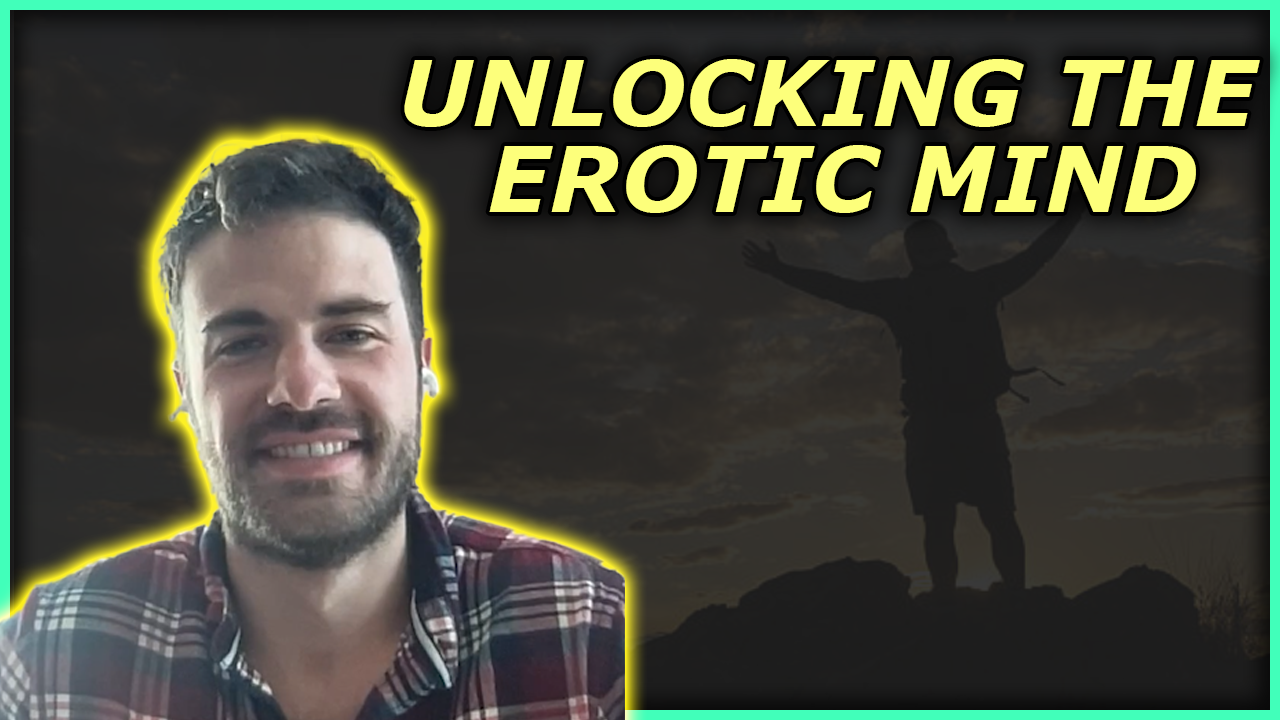
I recently sat down with Dr. Tom Gaither, a urologist and researcher at UCSF who specializes in MSM sexual health, to explore the concept of eroticism and how understanding our "erotic mind" can transform sexual reintegration. Tom has become known for putting bottoming on the medical map and challenging the heteronormative focus of urology. As a gay man himself, he brings both professional expertise and lived understanding to these conversations.
What struck me most about our discussion was this: 90% of sex happens between your ears. The brain is your largest sexual organ. If you're struggling with ED, delayed orgasm, or complete loss of libido after chemsex, the answer isn't just in your dick—it's in understanding your psychological relationship to sex.
This study guide explores Dr. Jack Morin's framework from "The Erotic Mind" and how you can use it as a roadmap back to genuine sexual pleasure. Whether you're five years clean and haven't had sex yet, or you're still using but wondering if sober sex could ever feel good, this is for you.
Let's do this work together.
Love, Dallas 💚
Understanding the Erotic Mind
The erotic mind is a state of consciousness, similar to sleep in that you can't just flip a switch to access it. It's that space where you're fully aroused—mentally and physically—where you're completely absorbed in sexual experience and moving toward pleasure or orgasm. You can slip in and out of this state; one moment you're fully present in erotic experience, the next you're thinking about your side fat in the mirror or whether you left the stove on.
Journal Prompt: Describe a time when you felt fully present during a sexual experience—completely absorbed, not thinking about performance or what you looked like. What was different about that moment compared to times when your mind wandered?
The Accelerators and Brakes Model
Dr. Emily Nagoski's concept provides crucial insight: we have sexual accelerators (things that rev up arousal) and brakes (things that inhibit it). Many of us in the chemsex world became experts at slamming the accelerator—adding porn, poppers, meth, multiple partners, increasingly intense scenarios. We kept adding stimulation to overcome the brakes.
But here's what we missed: if your foot is on the brake, no amount of gas will move you forward effectively.
The brakes are things like:
- Depression and anxiety
- Internalized homophobia
- Body dysmorphia and shame about dick size
- Performance anxiety
- Self-hatred
- Guilt about sex
- Unresolved trauma
- Fear of intimacy
Reflective Question: What are your primary sexual brakes? Can you identify what's keeping your foot pressed down, preventing arousal even when you want to feel turned on?
For many of us, the real work isn't adding more stimulation—it's addressing why we needed so much stimulation in the first place. This is mental health work. This is therapy work. And it's essential to sexual reintegration.
Action Exercise: Make two lists—one of your sexual accelerators (what genuinely turns you on) and one of your brakes (what inhibits arousal). Be brutally honest. Which list is longer? This tells you where your work needs to focus.
Why Your Libido Disappeared (And Why That Might Be Okay)
One of the most common things I hear: "Dallas, I've been clean for years and I have zero sex drive. I don't even think about sex. Something must be wrong with me."
Here's a perspective shift: diminishing sexual desire can be a sign of growth.
Dr. Gaither highlighted this from Morin's work—maybe you shouldn't be having sex right now. Maybe your low desire is your body's wisdom telling you that you need to go through some internal work before it's time to be sexual again.
Think about it: meth flooded your brain with dopamine, fundamentally changing your brain chemistry and receptor density. Like someone who takes Adderall long-term experiences downregulation of dopamine receptors, your brain needs time to restructure without the chemical override. This isn't a moral failing—it's neurobiology.
Everything happens for you, not to you. What if this contraction of desire is purposeful? What if it's protecting you from relapse, giving you space to heal, or creating room for you to discover who you are sexually without substances?
Journal Prompt: If your low libido is serving a purpose right now, what might that purpose be? What would need to shift internally before you felt ready to be sexual again?
Life operates in cycles of contraction and expansion. When you eventually expand again sexually, you'll expand further than before—but only if you use this contraction period for genuine growth rather than condemning yourself as defective.
Reflective Question: Can you practice curiosity rather than condemnation about your current sexual state? What would it feel like to trust that your body knows what it's doing?
The Four Cornerstones of Eroticism
Dr. Morin identified four psychological elements that consistently create erotic charge. Understanding these can help you build your own sexual blueprint—your roadmap to arousal without substances.
1. Violating Prohibitions: Breaking Rules and Crossing Boundaries
This is fundamental to eroticism across all orientations: doing something society tells you that you shouldn't do creates arousal. It's why sex in a church felt thrilling, why car sex in the Lowe's parking lot was electric, why the top porn categories involve taboos like "Mormon" or "stepbrother."
For gay men specifically, this cornerstone has particular resonance. When you're in the closet, every sexual encounter violates prohibition—and many men report that coming out, while psychologically healthy overall, did reduce some erotic charge. The sneaking around, the secrecy, the forbidden nature of it—that was part of what made it hot.
Here's the chemsex connection: Meth supercharged this cornerstone. We kept chasing the next prohibition, the next boundary, the next taboo. It was never enough because our tolerance for violation kept increasing. We watched things on Zoom we'd never imagined, engaged in scenarios that would have horrified our pre-meth selves, all chasing that erotic charge.
Reflective Question: What prohibitions genuinely aroused you before meth? Not the extreme taboos you escalated to while using, but the earlier boundaries that felt exciting to cross?
The work here is finding ways to violate prohibitions that don't destroy you. Role-play can be powerful—imagining scenarios, creating fantasy situations, finding partners who understand consent and boundaries while still creating that charge of doing something you "shouldn't."
Action Exercise: Identify three ways you could create a sense of prohibition or taboo in sexual situations that are actually safe. This might be role-playing scenarios, exploring new locations (that are legal and safe), or incorporating elements of secrecy or risk in controlled ways.
2. Longing and Anticipation: The Buildup of Desire
This is about delayed gratification—allowing desire to build rather than immediately satisfying every impulse. In gay culture, we're conditioned for instant gratification. We can open Grindr or Sniffies and have sex within an hour. But what we lose in convenience, we gain in erotic intensity through waiting.
Think about it: would you rather have mediocre sex tonight, or incredible sex in three days after building anticipation with someone? The longing itself becomes erotic.
This is impulse control work. It's the same skill you need when you're bored and reach for your phone, or when you're triggered and want to use. Can you sit with the feeling—in this case, horniness—without immediately resolving it?
Journal Prompt: Describe a time when anticipation made a sexual experience more intense. What did the waiting period feel like? How did it change the actual encounter?
Dr. Gaither noted this is more common in straight women's eroticism (the romance, the buildup, the moments right before) but it's a tool anyone can use. When you finally do have sex after building anticipation, you're already in your erotic mind. You don't need poppers or meth or multiple screens of porn to get there—your psychology has already done the work.
The gooning phenomenon that younger gay men engage in is actually playing with this—extending arousal, delaying orgasm, staying in that erotic state. While there can be some pelvic floor concerns with extreme duration, the principle is sound: pleasure intensifies when you don't rush to resolution.
Action Exercise: Practice delayed gratification in non-sexual contexts this week. When you feel an impulse (to check your phone, eat something, buy something), wait 10 minutes. Notice what happens to the desire. Then apply this same skill to sexual urges—let yourself be horny without immediately resolving it.
Reflective Question: What would it mean to build anticipation with a potential partner—to text, to flirt, to wait before actually meeting? Does this feel uncomfortable? If so, why?
3. Searching for Power: Dominance and Submission Dynamics
Power play is enormous in MSM sexuality and in heterosexual dynamics (think dominatrix culture). Interestingly, research shows 83% of lesbians incorporate power dynamics into their eroticism—it's a fundamental human turn-on.
The question isn't whether power matters to your eroticism, but which role you're drawn to and why.
Do you want to exert power or surrender it? Do you want to be controlled or be in control? And here's the complex part—bottoms are actually in control even in submission, setting boundaries about what is and isn't allowed. The submission happens within a framework of communicated consent, which is itself a form of power.
This is where BDSM culture excels: creating explicit frameworks for power exchange that don't require substances, can happen in private, and involve extensive communication about boundaries. You're hijacking the psychological charge of power dynamics for eroticism.
Journal Prompt: When you imagine yourself in sexual scenarios, what role do you gravitate toward? Do you want to be told what to do, or do you want to direct the action? Does this shift depending on the partner or situation?
The trauma connection: If you experienced abuse—sexual, physical, or emotional—power dynamics in your eroticism might be directly connected to those experiences. Someone with an abusive father might find themselves aroused by dominant older men. Someone who experienced forced sexual situations might seek out scenarios where they're "taken" or controlled.
This isn't about judgment. Dr. Morin talks about the "core erotic theme"—the idea that hidden within your turn-ons is a formula for transforming unfinished emotional business from childhood into excitation and pleasure.
Reflective Question: If your power dynamics preferences connect to childhood or adolescent experiences, can you identify that connection? What unfinished emotional business might you be processing through your sexuality?
Action Exercise: If power dynamics are part of your erotic blueprint, research BDSM community resources about safe, sane, and consensual play. Learn about negotiation, safewords, and aftercare. Power exchange done right doesn't require substances—it requires communication.
4. Overcoming Ambivalence: Managing Internal Conflicts
This cornerstone was the most abstract in Dr. Morin's framework—the tension between wanting something and fearing it, desiring connection but being terrified of intimacy, seeking pleasure but feeling unworthy of it.
In the chemsex context, meth resolved ambivalence by obliterating it. You didn't have to negotiate your conflicting feelings about sex—you just plowed forward like a freight train. No consent negotiations needed, no vulnerability, no sitting with the discomfort of wanting something while also fearing it.
In sexual reintegration, you'll face this head-on: I want sex, but I'm fucking terrified of it. You're scared of failing, scared it will never measure up to Tina sex, scared of the rawness of intimacy without chemical buffer, jealous of people who can easily fuck sober.
The work here is sitting with paradox—understanding that two seemingly contradictory things can both be true. Sex both harmed you (led you to meth, created trauma, damaged relationships) and can heal you (provides pleasure, connection, stress relief, intimacy). Both are real.
Journal Prompt: What ambivalence do you feel about sex and sexuality right now? Can you articulate both sides—what you want AND what you fear—without trying to resolve the tension?
Action Exercise: Practice holding paradox in other areas of your life. "I'm proud of my recovery AND I grieve what I've lost." "I love being sober AND I miss the intensity of using." Get comfortable with "both/and" rather than "either/or" thinking.
Peak Erotic Experiences: Mapping Your Sexual Blueprint
Here's a powerful exercise from Dr. Morin's research: identify 3-5 peak erotic experiences from before meth and write down every detail you can remember.
Who was the partner? What was your relationship to them? Where did you meet? Was it public or private? What was the emotional tenor? What were the specific acts? What made it feel so intensely erotic?
Write it all down—don't edit, don't judge, just record the memory in as much detail as possible. Then come back a few days later and look for patterns.
What themes emerge across these experiences?
Maybe you notice:
- They all involved a sense of risk or being somewhere you shouldn't
- They all included extended foreplay and anticipation
- They all featured partners who made you feel desired or valued
- They all happened when you felt confident in your body
- They all involved you being the one in control
These patterns reveal your sexual blueprint—your psychological roadmap to eroticism.
For those whose only peak experiences involved meth: Go deeper. Strip away the drug itself and examine the psychological and social elements. What was it about that person specifically? Were you being vulnerable and sharing truth about yourself? Had you been talking for a while before meeting, building anticipation? Was there a power dynamic at play? Were you in a location that felt transgressive?
Reflective Question: Looking at your peak erotic experiences, what psychological elements got wired together to create arousal for you? Can you separate these elements from the substance use?
Action Exercise: Create your "erotic blueprint" based on your peak experiences. Write out the psychological themes that genuinely arouse you. This becomes your reference guide—when you're ready to be sexual again, you'll know what elements to incorporate.
The Core Erotic Theme: Unfinished Emotional Business
Dr. Morin's most provocative idea: your core erotic theme contains a formula for transforming unfinished emotional business from childhood and adolescence into excitation and pleasure.
What does this mean practically?
If you grew up feeling invisible, your erotic template might center on being the focus of attention—being desired by multiple partners, being watched, being the center of a scene.
If you grew up with Catholic guilt and shame about sexuality, your eroticism might involve liberation from that guilt—doing exactly what you were told not to do, feeling free from judgment.
If you grew up without hearing "I love you," your fetish might literally be having partners tell you they love you during sex (guilty as charged on this one).
My personal example: During chemsex, I needed partners to tell me they loved me to get hard. Even on meth when most men struggle with erections, those words would send blood rushing downward. That was unfinished emotional business—the daddy who never said it, the childhood longing for that affirmation, all getting processed through my sexuality.
Now that I've done the healing work around that, it's no longer my fetish. But there are still elements of seeking approval and wanting to be liked by male partners that show up. That's the work—becoming aware of it so it's a tool you use rather than something that controls you.
Journal Prompt: What was missing or painful in your childhood and adolescence? Can you see how you might be trying to resolve that through sexual scenarios or dynamics?
Reflective Question: If you could identify your core erotic theme—the psychological pattern underneath your turn-ons—what would you want to do with that information? Can you use it playfully in role-play and fantasy while still addressing the original wound in therapy?
The key insight: Having awareness doesn't necessarily mean you have to change your eroticism. It means you understand yourself better, which gives you power over your own psychology rather than having it unconsciously control you.
Sexual Function Issues: ED, Delayed Orgasm, and Porn Dependence
Let's get practical about the physical issues many of you face in sexual reintegration.
Erectile Dysfunction
The pelvic floor connection: Many of us carry anxiety and stress directly in our pelvic floor muscles, essentially doing a kegel all day long. This hypertonic (super tight) pelvic floor restricts blood flow to the penis, contributing to ED.
Tom's recommendation: Sit on a tennis ball positioned at your perineum (the gooch—the area between your scrotum and anus) and focus on releasing that tension. Massage the area. Learn to consciously relax those muscles. This is life-hack territory that actually works.
The psychological component: Remember that scene at the chemsex party where someone showed you how to massage your gooch and suddenly you could get hard? That wasn't just physical—it was psychological. Your brain registered something that worked, creating a new pathway.
You can have the same breakthrough with psychological triggers. If you understand what genuinely arouses you (your erotic blueprint), you can recreate those conditions.
Action Exercise: Spend time this week practicing pelvic floor release. Sit on a tennis ball for 10 minutes daily. Focus on consciously letting go of tension in your perineum and learning what relaxation feels like in those muscles.
Delayed Orgasm and Inability to Ejaculate
This is incredibly common when starting sober sex, especially for guys coming off meth or who conditioned themselves to only orgasm with porn.
The death grip problem: Years of aggressive masturbation with visual overstimulation created a specific pathway to orgasm. Your brain and body learned a pattern—you need intense grip pressure, specific visual stimuli, maybe certain porn scenarios, to reach climax.
The retraining process:
- Reduce or eliminate porn (at least temporarily)
- Masturbate differently—lighter grip, slower pace, focus on sensation
- Incorporate fantasy that doesn't involve meth scenarios
- Practice mindful masturbation where you stay present with physical sensation
The performance anxiety trap: When you're with a partner and can't come, gay men often interpret this as "he doesn't like me" or "I'm not attractive enough." Then you get in your head about it, which makes it even harder to orgasm. It has nothing to do with attraction—it's about neural pathways and conditioning.
Journal Prompt: What are your patterns around orgasm? What specific conditions have you trained your body to need? Can you identify ways to slowly broaden those conditions?
Porn and Meth: The Tangled Web
For many of us, meth and porn became inseparably linked. Hours upon hours of porn while high created powerful associations. When we try to have sober sex, our brain immediately reaches for those meth-and-porn neural pathways.
The challenge: Every sexual thought triggers meth cravings. Every fantasy involves meth scenarios. So some guys simply shut down sexually entirely out of fear.
The work: You must untangle sex from meth. This requires:
- Identifying what aroused you before meth (your original arousal template)
- Discovering what you genuinely enjoyed about chemsex that wasn't the drug itself
- Creating new neural pathways through repetition and patience
- Potentially working with a sex therapist who understands addiction
Reflective Question: When you fantasize, do the fantasies immediately shift to meth scenarios? Can you catch that shift and intentionally redirect to non-meth imagery? This is retraining work—difficult but possible.
Action Exercise: Practice mindful masturbation once this week. No porn. Stay present with physical sensation. Notice when your mind wanders to meth scenarios and gently redirect to non-substance memories or fantasies. This is neural pathway work.
Sexual Reintegration Resources
Dr. Tom Gaither
- Instagram: [Research his page for pelvic floor exercises and MSM sexual health information]
- Focus areas: Bottoming health, erectile function in MSM, sexual wellness post-prostate cancer
The Erotic Mind by Dr. Jack Morin
- Available at major booksellers
- Take the Sexual Excitement Survey included in the book
- Work through the peak erotic experience exercises
Additional Support
- Consider sex therapy with someone who understands both addiction and queer sexuality
- Explore pelvic floor physical therapy if you have ongoing pain or ED
- Research BDSM community resources if power dynamics are part of your blueprint
My Work
- Website: www.drdallasbragg.com
- Sexual Reintegration courses and coaching
- Join the email list for resources and updates on group coaching opportunities
Final Thoughts: The Patient Path to Sexual Healing
Sexual reintegration isn't built in a day. Your brain needs time to restructure without methamphetamine's chemical override. Your neural pathways need thousands of repetitions to wire new associations between arousal and sober experiences.
This is patient, strategic work. It requires:
- Self-compassion when you struggle
- Curiosity instead of condemnation about your current state
- Willingness to address the brakes (mental health issues) before adding accelerators
- Understanding your psychological relationship to sex, not just your physical function
- Recognition that decreased libido might be purposeful growth rather than deficiency
Remember: 90% of sex happens between your ears. The work isn't just getting your dick hard—it's understanding what genuinely arouses you at a psychological level and learning to access your erotic mind without substances.
You can do this. The journey back to yourself includes the journey back to healthy sexuality. It just takes time, tools, and tremendous compassion for yourself.
Keep going. 💚

Responses